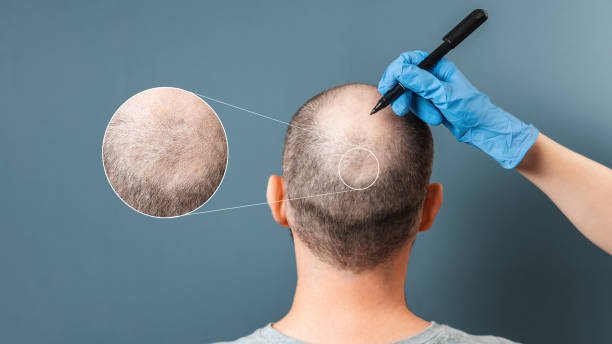
Scarring depends heavily on how donor follicles are harvested, how the scalp is closed, and how the patient heals. Hybrid Hair Transplant in Dubai combines FUE and FUT, so understanding the different scar patterns is important before deciding whether the technique suits your restoration plan.
Why Hybrid Surgery Has a Different Scarring Profile
A hybrid procedure does not use one universal extraction method. FUE removes individual follicular units through small punch openings, while FUT removes a strip of donor scalp that is then closed surgically.
That means the donor area can have two distinct forms of scarring: multiple small extraction marks associated with FUE and a linear scar associated with FUT.
The important distinction is that “hybrid” does not mean scar-free. It means the surgeon is combining two harvesting strategies to address graft requirements while managing the donor area according to its anatomy and long-term capacity.
FUE Extraction Marks
With FUE, each follicular unit is extracted individually using a small punch. The resulting marks are generally scattered across the donor region rather than forming one continuous line.
Their eventual visibility depends on several variables, including punch diameter, extraction pattern, harvesting density, skin characteristics, healing response, and the length of the surrounding hair.
FUT Linear Scarring
FUT creates a linear donor scar because a strip of scalp is surgically removed before the follicular units are dissected under magnification.
The quality of this scar depends on factors such as closure technique, scalp laxity, wound tension, surgical precision, healing, and the patient’s individual scar response.
How FUE and FUT Scars Differ
The two techniques create fundamentally different donor-area patterns.
| Factor | FUE | FUT | Hybrid |
|---|---|---|---|
| Main scar pattern | Small scattered marks | Linear scar | Combination |
| Extraction method | Individual follicular units | Donor strip | FUE + FUT |
| Short-hair visibility | Depends on punch size and harvesting | Depends mainly on linear scar | Depends on both patterns |
| Donor intervention | Distributed extraction | Strip excision | Planned combination |
| Main planning issue | Extraction distribution | Scar placement and closure | Balancing graft yield and scar characteristics |
| Best approach | Depends on donor anatomy and graft requirements | Depends on donor laxity and clinical suitability | Selected when combining techniques provides a better surgical plan |
This difference matters because patients often focus only on the number of grafts available. A surgeon must also consider what harvesting method will leave an acceptable donor-area appearance.
What Determines Hair Transplant Scar Visibility
Scar visibility is not determined by the technique name alone. Two patients undergoing similar procedures can develop very different-looking donor areas.
Punch Size and Extraction Pattern
For FUE, punch diameter and extraction technique influence the size and appearance of individual extraction sites. Overharvesting one small area can also make the donor region look uneven even when individual marks are small.
A carefully distributed extraction pattern helps preserve the visual density of the donor area.
Donor Hair Density
Naturally dense donor hair can conceal small extraction marks more effectively than sparse donor hair. However, excessive extraction from a dense area can reduce that camouflage.
The surgeon therefore needs to think about both graft availability and the appearance of the remaining follicles.
Hair Length
Patients who normally keep their hair very short should discuss this before surgery.
A person comfortable with longer hairstyles may have different scar-visibility priorities from someone who regularly uses a very short clipper cut. The surgical plan should account for the patient’s expected future hairstyle rather than simply today’s preference.
Scalp Characteristics
Skin thickness, elasticity, pigmentation, and individual healing characteristics can influence how donor scars mature.
This is particularly relevant to FUT because the linear scar must accommodate the movement and tension of the surrounding scalp.
Why FUT Scar Width Matters
A FUT scar is not simply a line created by surgery. Its final appearance is influenced by how the wound heals after closure.
Scalp Laxity
Scalp laxity describes how freely the donor scalp can move. Adequate laxity can help facilitate closure with appropriate tension.
If the scalp is relatively tight, excessive tension can contribute to a wider or more noticeable scar. This is one reason donor assessment should occur before deciding how much tissue can safely be removed.
Closure Technique
The way the donor incision is closed affects the eventual scar.
Modern closure approaches aim to position the scar so surrounding hair can camouflage it while reducing unnecessary tension. The objective is not merely to close the wound but to create a stable donor area that remains compatible with future hair growth and hairstyle choices.
Previous Donor Surgery
A previous strip procedure can alter the donor area’s anatomy and available laxity. Scar tissue may also influence where another incision could safely be considered.
Patients with previous transplants should therefore have existing scars assessed rather than assuming the donor area can be treated as untouched tissue.
The Hybrid-Specific Scarring Trade-Off
The central question is not whether hybrid surgery creates more or fewer scars than one technique in every patient. The more useful question is whether combining harvesting methods produces an appropriate balance between graft acquisition, donor preservation, and cosmetic scar management.
A surgeon may use FUE to harvest selected follicular units while using FUT where a strip approach provides a clinically useful source of additional grafts.
This can be relevant in extensive restoration cases where recipient-area requirements are substantial. Tajmeels describes its Hybrid method as combining FUE and FUT and lists it among options for advanced hair-loss cases requiring significant graft planning.
Why Distribution Matters
Scarring should be evaluated across the entire donor zone.
A concentrated extraction pattern can produce visible thinning even when individual FUE marks are difficult to see. Conversely, a well-planned distribution can preserve the overall appearance of the donor region.
Hybrid planning therefore requires the surgeon to map where each harvesting method will be used rather than treating the donor area as one uniform surface.
When a Patient’s Hairstyle Changes the Decision
Scar visibility becomes particularly important when a patient prefers short hairstyles.
Someone who routinely wears longer hair may have substantial natural coverage over the donor region. Someone who keeps the sides and back extremely short may expose both FUE extraction marks and an FUT scar more readily.
Short Hair Considerations
Patients considering very short cuts should ask how the proposed donor harvesting pattern may look at their preferred hair length.
The discussion should include:
- Expected FUE mark visibility
- Location of any FUT scar
- Planned donor harvesting density
- Existing donor scars
- Future donor availability
- Whether the patient may want very short hairstyles later
- Whether additional procedures could affect the donor appearance
This is a planning issue, not simply a cosmetic preference.
Previous Scars Can Change the Surgical Plan
A previous hair transplant can leave scars even when the patient remembers the procedure as successful.
These scars may result from FUT, previous FUE harvesting, or a combination of procedures. They can influence donor density, scalp mobility, and the surgeon’s ability to safely obtain additional grafts.
Assessing an Existing FUT Scar
The surgeon may examine the scar’s width, position, tissue quality, surrounding density, and scalp mobility.
A mature, narrow scar can present a different planning situation from a widened or irregular scar.
Assessing Previous FUE Harvesting
With prior FUE, the concern may be less about one linear scar and more about cumulative donor depletion.
If substantial harvesting has already occurred, another procedure must account for the remaining follicular units and the visual density of the donor region.
Scar Maturation After Hybrid Hair Transplant
A donor scar does not reach its final appearance immediately after surgery.
Early redness, swelling, tenderness, crusting, or sensitivity can make the donor area appear more noticeable during the initial healing period. These changes generally need to be evaluated according to the surgeon’s postoperative instructions rather than judged as the final cosmetic result.
Over time, scars typically mature and become less conspicuous, although the final appearance varies between individuals.
Early Healing
During the initial phase, the donor area requires protection from unnecessary friction and trauma.
Patients should follow the clinic’s instructions for washing, medication, sleeping position, activity restrictions, and wound care.
Later Scar Maturation
As healing progresses, the tissue gradually changes in texture and appearance.
A patient should not assume that the appearance seen during the first few weeks represents the permanent result.
Dubai Factors That Can Affect Scar Care
Dubai’s intense sunlight makes postoperative sun protection particularly relevant.
Freshly healing skin can be more sensitive to environmental exposure, and unnecessary sun exposure may complicate pigmentation or irritation. Patients should follow their surgeon’s instructions regarding when the scalp can safely be exposed and what protective measures are appropriate.
Heat and sweating can also make postoperative comfort more challenging, especially during the early recovery period.
For patients researching treatment options, a broader hair restoration approach in Dubai should include not only graft numbers but also donor-area management, recovery requirements, and long-term cosmetic planning.
Read More: Hair Loss Treatment in Dubai for Thinning After Weight Loss
How Surgeons Reduce Unnecessary Scarring
Good scar management begins before the first graft is removed.
The surgeon should evaluate donor density, scalp laxity, follicular-unit characteristics, previous procedures, desired hairstyle, graft requirements, and the patient’s long-term restoration goals.
Precise Donor Mapping
Mapping helps determine where grafts can be removed without creating obvious depletion.
For FUE, this means distributing extraction appropriately. For FUT, it means selecting an incision location and size that fits the donor anatomy.
Conservative Donor Harvesting
The goal is not to remove every potentially available follicle.
A donor area must retain enough density to maintain a natural appearance and preserve options for future treatment if native hair loss progresses.
Appropriate Technique Selection
There is no universally superior harvesting method for every patient.
FUE may be attractive when minimizing a linear scar is a priority, while FUT can provide a substantial number of follicular units through strip harvesting in appropriately selected patients. Hybrid surgery is considered when using both approaches provides a useful balance for the individual’s restoration requirements.
Questions to Ask Before Choosing a Hybrid Procedure
Patients concerned about scarring should make the donor area part of the consultation rather than discussing only the recipient area.
Useful questions include:
- How will FUE and FUT be divided in my donor area?
- Where would the FUT scar be positioned?
- How visible could the FUE extraction marks be at my usual hair length?
- How much donor density will remain after harvesting?
- Do I have enough scalp laxity for the proposed FUT component?
- Do my previous procedures affect donor-area planning?
- How will my preferred hairstyle influence the technique?
- What postoperative scar-care instructions will I need?
- How long should I expect the donor area to remain visibly irritated?
- What happens if I need another transplant in the future?
The quality of these answers can be more informative than simply being told that a technique produces “minimal scarring.”
Red Flags in Scar Discussions
Be cautious with claims that imply hair transplantation is completely scarless.
FUE generally produces small extraction sites rather than a conventional linear incision, but those sites can still leave visible changes. FUT creates a linear donor scar, although surgical technique and individual healing can influence its final appearance.
Likewise, no responsible surgeon should promise an identical scar outcome for every patient.
A realistic consultation should explain both the benefits and limitations of the proposed harvesting strategy.
The Strategic Investment
The long-term value of a Hybrid Hair Transplant in Dubai is not measured solely by how many grafts can be transplanted. It also depends on donor-area preservation, appropriate harvesting technique, scar management, graft planning, and whether the result remains compatible with the patient’s future appearance.
For patients evaluating their options, Tajmeels Clinic can provide a structured consultation focused on donor capacity, technique selection, restoration goals, and realistic expectations. A well-planned procedure should treat the donor area as carefully as the hairline, crown, and other recipient zones because the quality of the restoration is ultimately judged from every angle.