India’s cities and towns are witnessing a quiet but steady shift in how people and goods move over short distances. Electric three-wheelers, popularly known as e-rickshaws, have become a common sight on roads, connecting metro stations to residential colonies, carrying vegetables to local markets, and offering an affordable daily commute to millions. As fuel prices fluctuate and environmental concerns grow, e-rickshaws have emerged as a practical solution for last-mile passenger transportation and light commercial movement.
With this rising demand, the number of manufacturers offering e-rickshaws has also increased. For a buyer, driver, fleet owner, or small business, this creates both opportunity and confusion. Choosing the right e-rickshaw manufacturer is no longer just about picking a vehicle with an attractive price tag — it involves understanding build quality, battery performance, after-sales support, and long-term running costs.
This guide walks you through everything you need to know before making a decision, whether you’re buying your first e-rickshaw or expanding a fleet.
What Is an E-Rickshaw Manufacturer?
An e-rickshaw manufacturer is a company that designs, assembles, and supplies electric three-wheelers used for passenger transport or goods carrying (commonly called e-rickshaw loaders). This involves more than just putting a motor and battery into a chassis. A genuine manufacturer is responsible for:
- Sourcing and testing components such as motors, controllers, and batteries
- Ensuring the vehicle meets safety and structural standards
- Assembling the final product with quality checks
- Providing spare parts and service support after the sale
Some companies operate as manufacturers with in-house assembly lines, while others function more as traders who rebrand vehicles from other sources. Understanding this difference matters, especially when you need spare parts or warranty support later.
Why Choosing the Right Manufacturer Matters
An e-rickshaw is a working vehicle. For most owners, it is a daily income-generating asset, not a leisure purchase. This means downtime due to poor build quality or unavailable spare parts directly affects earnings.
Choosing a manufacturer carefully helps you avoid:
- Frequent breakdowns that reduce daily working hours
- Difficulty finding compatible spare parts
- Poor resale value due to unreliable brand reputation
- Higher long-term costs despite a lower upfront price
A slightly higher initial investment in a well-built vehicle, backed by a manufacturer with proper service infrastructure, often works out more economical over the vehicle’s lifetime.
Key Factors to Consider Before Buying an E-Rickshaw
Build Quality and Durability
The body, chassis, and suspension of an e-rickshaw are constantly exposed to uneven roads, frequent stops, and variable loads. Look for manufacturers that use robust frame materials and have visibly solid welding and fitting quality. A well-built e-rickshaw should handle daily wear without frequent structural repairs.
Battery, Motor and Performance
The battery and motor together determine range, speed, and reliability. Buyers should check the battery type (commonly lead-acid or lithium-ion), its stated capacity, and expected charging cycles. The motor should be powerful enough to handle typical passenger or cargo loads on local terrain, including moderate inclines.
Load Capacity and Passenger Comfort
For passenger e-rickshaws, comfortable seating, adequate legroom, and a stable ride matter for driver income, since comfortable vehicles tend to attract more repeat passengers. For e-rickshaw loaders, the load-bearing capacity should match your typical cargo — overloading beyond the manufacturer’s specification shortens the vehicle’s lifespan.
Running Cost and Maintenance
Running costs include electricity consumption, tyre wear, battery replacement cycles, and periodic servicing. An energy-efficient design with easily serviceable parts helps keep these costs predictable. Ask any prospective manufacturer for realistic running cost expectations rather than relying on informal estimates.
Warranty and After-Sales Support
A warranty on the motor, controller, and battery reflects the manufacturer’s confidence in its product. Equally important is whether the manufacturer or its dealer network offers timely servicing and genuine spare parts in your area. A vehicle without accessible support can mean long, costly downtime.
Why Experienced Manufacturing Matters
Manufacturing experience often shows in ways that aren’t immediately visible to a first-time buyer. Companies that have been building e-rickshaws for several years tend to have refined their designs based on real-world feedback from drivers and fleet operators — addressing common failure points, improving component sourcing, and building more reliable after-sales networks.
Rather than judging a manufacturer purely on the invoice price, it helps to ask:
- How long has the company been manufacturing e-rickshaws or similar electric vehicles?
- Do they have a track record of consistent product quality?
- Is spare parts availability confirmed for your city or region?
- What do existing owners or local dealers say about long-term reliability?
Evaluating these questions alongside price gives a more complete picture of the total cost of ownership.
Housefull E-Rickshaw: Electric Mobility Solutions from Ghaziabad
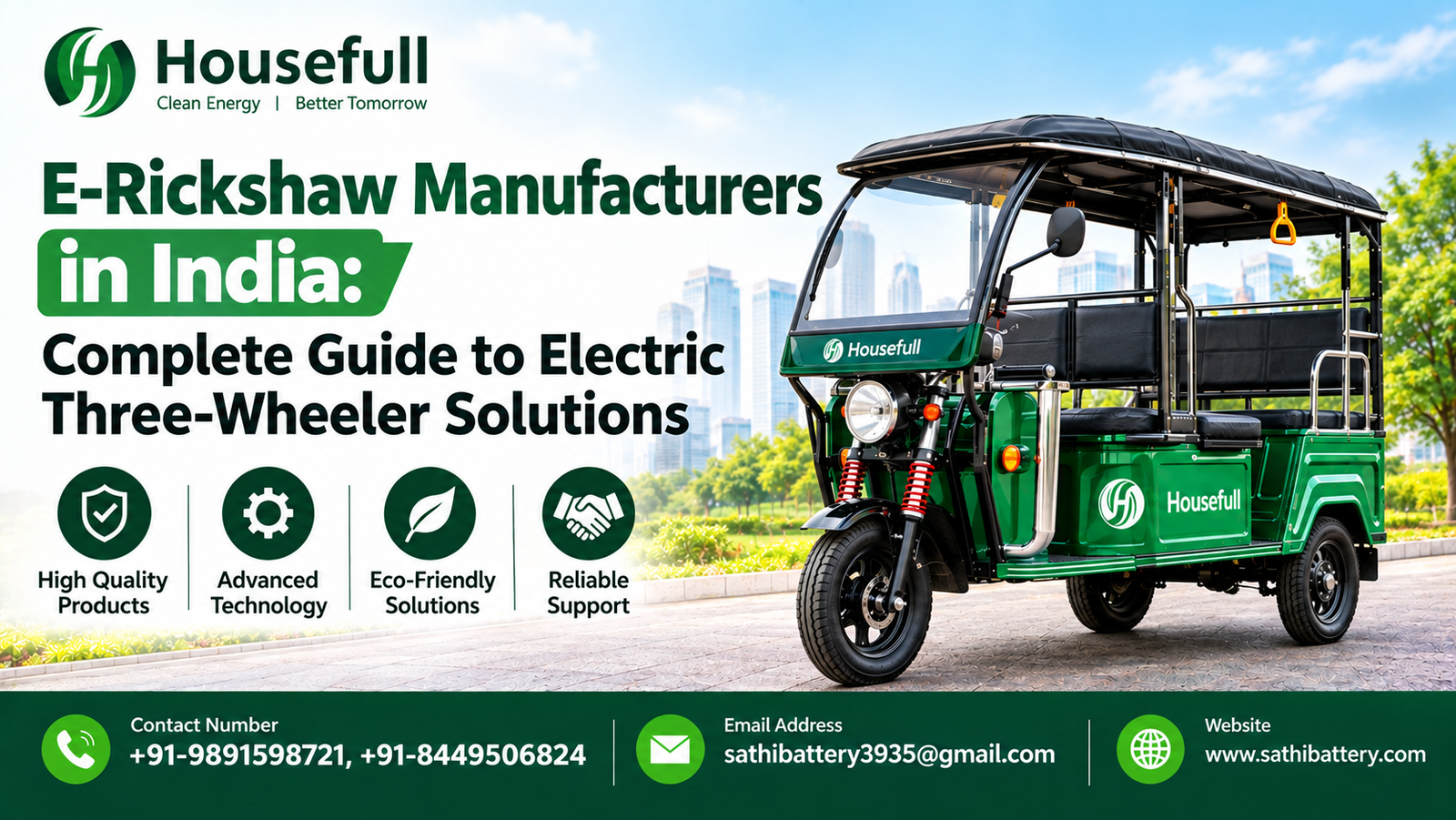
Housefull E-Rickshaw, offered by Sathi Battery, is a manufacturer and supplier based in Mohan Nagar, Ghaziabad. Established in 2014, the company has been involved in electric mobility and related industrial products for over a decade.
Housefull’s product range includes:
- E-rickshaws for passenger transportation
- E-rickshaw loaders for goods and cargo movement
- Magnet chargers
- Gauss meters
According to the company, its e-rickshaw solutions are designed to be eco-friendly and zero-emission, with an emphasis on high load capacity and low running costs. The company positions its products around durability, efficiency, and practical day-to-day usability for both passenger and goods transportation needs.
For readers exploring options for an electric rickshaw company based in the Ghaziabad–Delhi NCR region, Housefull’s e-rickshaw and loader range is worth reviewing alongside other manufacturers, particularly if local servicing and an established presence in the area are priorities for you. You can also learn more about the company’s background on its official website.
E-Rickshaw vs Traditional Fuel-Based Three-Wheelers
Choosing between an electric rickshaw and a traditional fuel-based (CNG or petrol) three-wheeler depends on your specific usage pattern, local infrastructure, and budget. Here’s a balanced look at the key differences:
Energy and fuel costs: Electricity used for charging is generally cheaper per kilometre than CNG or petrol, though actual savings depend on local electricity tariffs and vehicle efficiency.
Maintenance considerations: E-rickshaws have fewer moving parts than internal combustion engines, which can mean simpler routine maintenance. However, battery health and replacement cycles are an important ongoing cost to plan for.
Environmental impact: E-rickshaws produce zero tailpipe emissions, making them a cleaner option for congested urban areas, though their overall environmental footprint also depends on how the electricity used is generated.
Daily commercial usage: Fuel-based vehicles typically offer faster refuelling, which can suit very high daily mileage. E-rickshaws require charging time, so route planning and charging access matter for continuous commercial use.
Noise: Electric rickshaws run considerably quieter, which is an advantage in residential areas and during early morning or late evening operation.
Suitability for last-mile transportation: For short-distance passenger and cargo movement within a city or locality, e-rickshaws are generally well suited, though suitability ultimately depends on charging access and route distances.
Neither option is universally better — the right choice depends on your specific operating conditions, budget, and access to charging infrastructure.
How to Choose the Right E-Rickshaw for Your Business
Before finalising a purchase, it helps to work through a practical checklist:
- Intended usage: Will the vehicle be used for passenger transport, goods delivery, or both?
- Passenger or cargo requirement: How many passengers or how much load will you typically carry?
- Expected daily distance: Estimate your average daily running distance to assess battery range needs.
- Load requirement: Confirm the manufacturer’s rated load capacity matches your actual usage, with some margin.
- Battery considerations: Compare battery type, warranty period, and expected replacement cost.
- Charging requirements: Check charging time and whether it fits your daily working schedule.
- Service availability: Confirm that spare parts and service centres are accessible in your area.
- Warranty: Understand exactly what components are covered and for how long.
- Total ownership cost: Look beyond the purchase price to include charging, maintenance, and battery replacement over the vehicle’s expected life.
Working through this list with any manufacturer or dealer — including Housefull/Sathi Battery — can help you make a more informed, business-focused decision.
Frequently Asked Questions
What should I check before buying an e-rickshaw?
Check build quality, battery type and warranty, motor performance, load capacity, and the availability of spare parts and service support in your area before making a decision.
How do I choose an e-rickshaw manufacturer?
Evaluate the manufacturer’s experience, product quality, warranty terms, and local dealer or service network, rather than relying solely on the initial purchase price.
What factors affect e-rickshaw running costs?
Running costs are influenced by electricity consumption, battery lifespan and replacement cost, tyre wear, and the frequency of servicing required.
Are e-rickshaws suitable for commercial transportation?
E-rickshaws are widely used for short-distance passenger transport and cargo movement, making them suitable for many commercial applications, particularly within cities and towns, depending on route length and charging access.
What after-sales support should I expect from a manufacturer?
You should expect access to genuine spare parts, clear warranty terms on the motor, battery and controller, and reasonably prompt servicing through the manufacturer’s dealer network.
Conclusion
Selecting the right e-rickshaw manufacturer involves weighing build quality, battery and motor performance, running costs, and after-sales support against your specific business needs. A well-informed decision today can mean fewer breakdowns, lower long-term costs, and a more dependable daily income tomorrow.
If you’re exploring e-rickshaws, e-rickshaw loaders, or related electric mobility products, Housefull E-Rickshaw / Sathi Battery welcomes enquiries from buyers, dealers, and fleet operators looking to learn more about their offerings.
Contact Housefull E-Rickshaw
Address: 10-A Aanand Industries, Mohan Nagar, Ghaziabad
Contact: +91-9891598721 +91-8449506824
Email: sathibattery3935@gmail.com
Website: https://sathibattery.com/