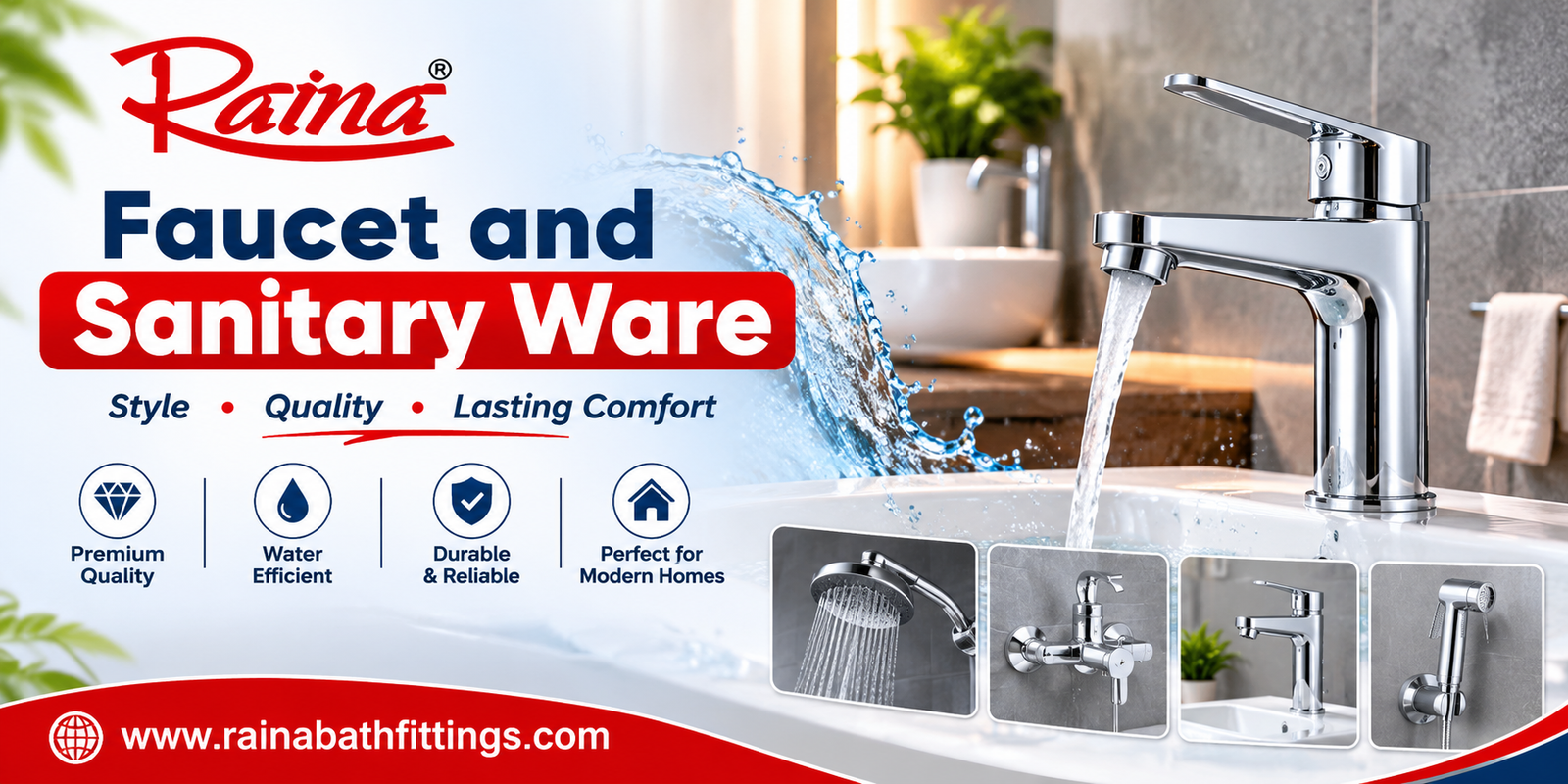
Choosing quality Faucet and Sanitary Ware comes down to five checks: the body material (solid brass lasts longest), the internal cartridge (ceramic disc is the standard), the finish (PVD or chrome with a tested coating), certifications (ISI/BIS, and ISO or WRAS-type approvals where relevant), and the warranty. A faucet that scores well on all five typically runs leak-free for 10 to 15 years, while a cheap one can start dripping in two.
At Raina Bath Fittings, we see the same pattern every week: buyers pick a faucet collection for looks, then replace it after one monsoon season of hard water. This guide shows you how to avoid that.
Quick Answer: How Do You Choose a Quality Faucet?
Look for these six things:
- Solid brass body, not zinc alloy or plastic
- Ceramic disc cartridge for smooth, drip-free operation
- Tested finish such as chrome plating or PVD, with salt-spray resistance
- BIS/ISI marking and flow-rate compliance
- Aerator to save water without losing pressure
- Written warranty of at least 5 years on the body and 1 to 2 years on the cartridge
If a product fails two or more of these, skip it, whatever the price tag says.
What Is Included in Faucet and Sanitary Ware?
“Sanitary ware” covers the ceramic and vitreous fixtures in a bathroom: washbasins, water closets (WC), urinals, cisterns, and pedestals. “Faucets” and “bath fittings” cover the taps, mixers, showers, and valves that control water.
They work as a system. A premium faucet paired with a poorly glazed basin still disappoints, because splash patterns, stain resistance, and cleaning ease depend on both.
| Category | Typical Products | Main Quality Factor |
| Faucets | Basin mixers, pillar cocks, bib cocks, wall mixers | Brass body, cartridge |
| Showers | Overhead, hand, rain showers | Nozzle design, flow rate |
| Sanitary ware | WC, wash basin, urinal | Glaze, vitreous density |
| Accessories | Hand sprays, angle valves, flush tanks | Material, fit |
1. Start With the Material
Material decides lifespan more than any other factor.
Brass vs. Zinc vs. Stainless Steel
- Brass: Dense, corrosion-resistant, and repairable. This is the gold standard for the Indian water conditions, where TDS levels are often high.
- Zinc alloy: Cheaper and lighter, but it corrodes faster and can crack under pressure.
- Stainless steel (304/316 grade): Excellent for rust resistance, popular in coastal homes, though harder to shape into designer forms.
Expert tip: Weigh the faucet in your hand. A solid brass mixer feels noticeably heavy. If it feels light for its size, it is likely hollow or alloyed.
2. Check the Cartridge: The Hidden Heart of a Faucet
The cartridge controls water flow and temperature. It is also the part that fails first.
- Ceramic disc cartridges resist wear and hard-water scaling, and are rated for 500,000+ open-close cycles in good products.
- Rubber washer systems are older technology and drip within a few years.
Ask the seller which cartridge brand is used. Reputable makers will tell you without hesitation.
3. Judge the Finish Properly
A finish is more than color. It protects the metal underneath.
| Finish | Best For | Care Level |
| Chrome | Everyday use, budget to mid-range | Low |
| Brushed nickel | Hides fingerprints and water spots | Low |
| Matte black | Modern, minimalist bathrooms | Medium |
| PVD gold/rose gold | Premium look, high scratch resistance | Low |
What to look for: PVD (Physical Vapor Deposition) coatings bond at a molecular level and resist fading far better than basic spray paint finishes. Ask for the salt-spray test hours; 200+ hours is a solid mark for chrome.
4. Verify Certifications and Standards
Certifications are your proof that claims are true.
- BIS/ISI marking for taps and sanitary ware in India
- Water-efficiency ratings (flow rate typically 6 to 8 litres per minute for basin faucets)
- Lead-content compliance, important for drinking-water safety
- Manufacturer test reports on request
If a brand cannot show these, treat it as a warning sign.
5. Match the Faucet to Your Water and Bathroom
Good products still fail in the wrong setting.
- Hard water homes: Choose ceramic cartridges, aerators with easy-clean nozzles, and finishes that resist limescale.
- Low-pressure supply: Pick pressure-compensating designs or a booster pump.
- Coastal areas: Favor stainless steel or heavily coated brass.
- Small bathrooms: Wall-mounted mixers save counter space.
Example: A family in Ghaziabad with 400+ ppm TDS water switched from a plated zinc mixer to a solid brass ceramic-disc model. Their repeat plumber visits dropped from three a year to zero.
6. Don’t Ignore Sanitary Ware Quality
For basins and toilets, inspect these points in the showroom:
- Glaze smoothness: Run your hand across it. Pits or rough spots trap bacteria and stains.
- Water absorption: Quality vitreous china absorbs less than 0.5% water.
- Flush performance: Dual-flush systems (3/6 litres) save thousands of litres yearly.
- Trap design: A wider, smoother trapway clogs less.
7. Read the Warranty Carefully
A warranty tells you how confident the maker is.
- Look for 5+ years on body, 1 to 2 years on cartridge, and a lifetime finish guarantee on premium lines.
- Confirm that service support exists in your city.
- Keep your invoice and warranty card.
Common Mistakes Buyers Make
- Buying on looks alone
- Choosing the cheapest option and paying twice
- Mixing brands without checking thread and fitting compatibility
- Skipping a plumber’s opinion before installation
- Forgetting spare-part availability
Why Choose the Raina Bath Fittings Faucet Collection?
Our faucet collection is built around what actually matters in Indian homes: brass construction, ceramic cartridges, durable finishes, and designs that suit modern and classic bathrooms alike. Alongside faucets, we offer matching sanitary ware so your bathroom looks consistent and performs reliably.
Our team helps you compare options in person, explains the technical differences without jargon, and guides you to the right product for your budget and water conditions.
Frequently Asked Questions
- Which material is best for a faucet?
Solid brass is the best material for most homes because it resists corrosion, handles pressure, and lasts 10 to 15 years. Stainless steel is a good alternative in coastal regions.
- How long should a good faucet last?
A quality brass faucet with a ceramic cartridge typically lasts 10 to 15 years with normal use. Budget zinc models often need replacement within 2 to 4 years.
- What is the difference between faucets and sanitary ware?
Faucets are the fittings that control water flow, like taps and mixers. Sanitary ware refers to ceramic fixtures such as washbasins and toilets. Together they make up your bathroom set.
- How can I tell if a faucet is good quality in a store?
Check its weight, finish smoothness, handle movement, and BIS marking. Ask about the cartridge type and warranty. Solid brass feels heavy, and the handle should turn smoothly without wobble.
- Is an expensive faucet always better?
Not always. Price should reflect material, cartridge quality, finish technology, and warranty, not just brand name. Compare specifications, not labels.
Conclusion
Quality faucet and sanitary ware is an investment you use every day for a decade or more. Focus on solid brass, ceramic cartridges, tested finishes, proper certifications, and a real warranty. Match the product to your water type and bathroom size, and you avoid most of the problems buyers regret later.
Contact us :- https://rainabathfittings.com/contact