Medically reviewed by Dr. Mohammad Sameer Alsalih
Introduction
Hair loss can gradually affect hair density, volume, and overall appearance, making it a concern for people seeking healthier-looking hair. From thinning strands to reduced hair fullness, different factors can influence the way hair grows and looks. Among the available hair restoration approaches, Platelet-Rich Plasma (PRP) therapy has gained attention as a non-surgical option for supporting hair growth. Understanding the benefits, process, and expected outcomes of the Best PRP Hair Treatment in Abu Dhabi can help individuals decide whether this approach matches their hair restoration goals.
What Is PRP Hair Treatment?
PRP hair treatment is a hair restoration approach that uses platelet-rich plasma obtained from an individual’s own blood. Platelets contain naturally occurring growth factors that are associated with the body’s repair and renewal processes.
The treatment focuses on supporting the scalp environment and encouraging healthier-looking hair growth. Rather than adding artificial hair or changing the appearance of existing strands, PRP aims to support the natural hair growth cycle.
Key points to understand include:
- Natural components: PRP uses plasma containing a concentrated amount of platelets.
- Non-surgical approach: It is performed without a hair transplant procedure.
- Hair growth support: The approach aims to encourage stronger-looking and fuller hair.
- Scalp-focused treatment: Attention is directed towards the scalp and areas experiencing thinning.
- Individual goals: Treatment expectations can differ depending on personal hair concerns.
How Does PRP Hair Treatment Work?
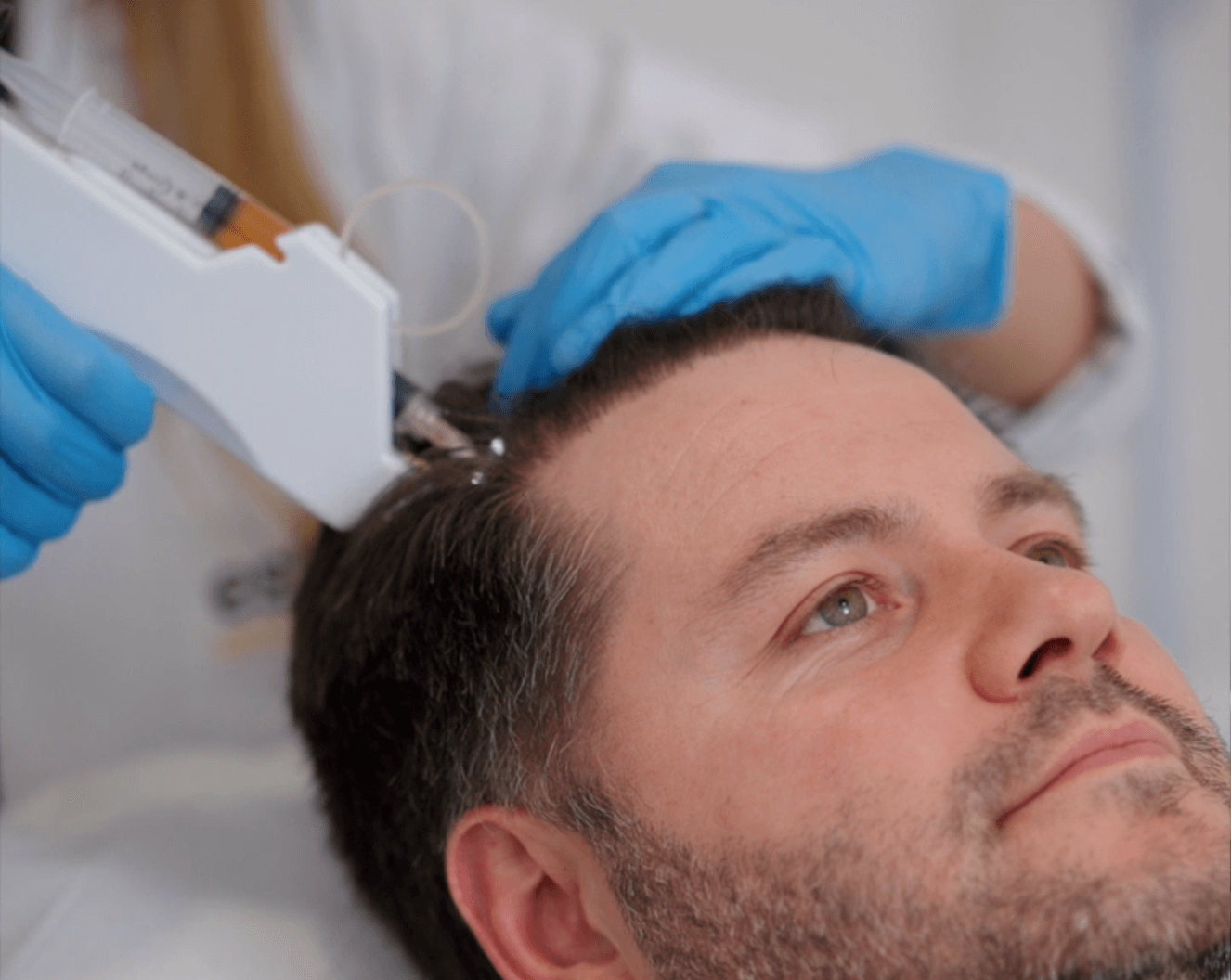
PRP hair treatment involves preparing platelet-rich plasma and introducing it into selected areas of the scalp. The process is designed to deliver concentrated platelets to areas where additional hair growth support is desired.
The approach generally involves several stages:
1. Collection of a Blood Sample
A small blood sample is collected as the starting material for preparing platelet-rich plasma. This provides the natural components required for the treatment.
2. Separation of Platelet-Rich Plasma
The collected sample is processed to separate the platelet-rich portion from other blood components. This preparation produces plasma with a concentrated platelet content.
3. Preparation of the Scalp
The scalp areas selected for treatment are prepared before the PRP application. This helps organise the treatment according to the areas of concern.
4. Application of PRP
The prepared platelet-rich plasma is introduced into the targeted scalp areas. The aim is to provide growth-factor-rich plasma where hair growth support is desired.
5. Follow-Up and Hair Care
A personalised follow-up approach helps monitor changes in hair appearance over time. Consistent hair care and suitable guidance can also support overall hair maintenance.
Is PRP Hair Treatment Effective for Hair Loss?
PRP hair treatment can be an effective option for supporting hair growth in selected individuals, particularly those experiencing certain forms of hair thinning. Its effectiveness is associated with the potential role of platelet-derived growth factors in supporting the hair growth environment.
However, results are not identical for everyone. Hair concerns differ from person to person, and the suitability of PRP depends on individual circumstances.
Some of the intended benefits include:
- Improved hair density: Supporting the appearance of fuller hair in areas experiencing thinning.
- Healthier-looking strands: Helping improve the overall appearance of existing hair.
- Hair growth support: Encouraging a more favourable environment for natural hair growth.
- Scalp rejuvenation: Focusing on the condition of the scalp as part of a hair restoration approach.
- Non-surgical restoration: Offering an alternative approach for people exploring options beyond surgical hair restoration.
It is important to understand that PRP is not a guaranteed solution for every type of hair loss. Its effectiveness depends on the nature of the hair concern and the individual’s response.
What Types of Hair Loss Can PRP Treatment Address?
Different forms of hair loss can affect hair density and growth patterns. Understanding these concerns helps explain where PRP may be considered as part of a hair restoration plan.
Androgenetic Alopecia
Androgenetic alopecia is commonly known as pattern hair loss. It can affect both men and women, although the pattern of thinning may differ.
PRP is sometimes considered as a supportive option for individuals experiencing this type of hair thinning. Its purpose is to encourage healthier-looking hair and support existing follicles.
Male Pattern Hair Loss
Male pattern hair loss often involves gradual thinning around the temples and crown. Over time, hair density may become noticeably reduced.
PRP may be explored by individuals who want to support existing hair and improve the appearance of thinning areas.
Female Pattern Hair Loss
Female pattern hair loss commonly appears as reduced density around the top of the scalp or a widening hair part. The overall hairline may remain relatively unchanged.
PRP may be considered as part of an approach focused on supporting hair fullness and improving the appearance of thinning hair.
General Hair Thinning
Some individuals notice that their hair gradually becomes less dense without a clearly defined pattern. This may affect the overall volume and appearance of their hairstyle.
PRP is one approach that may be explored when the goal is to support existing hair growth.
What Are the Main Benefits of PRP Hair Treatment?
PRP has attracted attention because it uses naturally occurring components and focuses on supporting the body’s existing hair growth processes.
Its commonly discussed benefits include:
Uses Naturally Derived Platelets
PRP is prepared from the individual’s own blood. The platelet-rich portion contains growth factors that play a role in natural repair and renewal processes.
Non-Surgical Hair Restoration
Unlike hair transplantation, PRP does not involve surgically relocating hair follicles. It provides an alternative for people exploring non-surgical hair restoration approaches.
Focuses on Existing Hair
PRP is intended to support areas where existing hair follicles are present. This makes it different from procedures designed to redistribute hair follicles.
Supports Hair Density
One of the main goals of PRP is to improve the appearance of hair density and fullness. Individuals experiencing thinning may explore it as part of their hair care goals.
Personalised Treatment Approach
Hair loss patterns and individual goals vary. A personalised approach allows the treatment plan to reflect the person’s hair concerns and desired appearance.
What Results Can You Expect from PRP Hair Treatment?
Understanding the expected results is an important part of exploring any hair restoration option. PRP focuses on supporting natural hair growth rather than producing an immediate cosmetic change.
The desired outcomes may include:
- Improved fullness: Hair may appear fuller as its density improves.
- Better hair appearance: Existing strands may look healthier and more substantial.
- Reduced appearance of thinning: Targeted areas may show a more balanced appearance.
- Natural-looking improvement: The goal is to support the individual’s own hair rather than introduce artificial hair.
- Gradual changes: Hair-related improvements are generally assessed over time rather than immediately after treatment.
It is helpful to maintain realistic expectations. The degree of improvement can vary, and PRP does not produce identical outcomes for everyone.
How Many PRP Hair Treatment Sessions Are Needed?
The number of PRP sessions depends on individual hair concerns, treatment goals, and the approach selected for the individual.
PRP is commonly organised as a series of sessions rather than a single treatment. A planned schedule allows changes in hair appearance to be assessed over time.
Important considerations include:
- Starting hair condition: Existing hair density and the pattern of thinning can influence the treatment approach.
- Personal goals: Some individuals may prioritise overall fullness, while others focus on particular thinning areas.
- Treatment schedule: Sessions may be arranged according to an individualised plan.
- Progress assessment: Changes in hair appearance can help guide future treatment decisions.
- Maintenance approach: Further sessions may be considered depending on individual goals and progress.
There is no universal session schedule that applies to everyone.
PRP Hair Treatment vs Hair Transplant: What Is the Difference?
PRP and hair transplantation are two different approaches to hair restoration. Although both are associated with improving hair appearance, their methods and objectives are not the same.
PRP Hair Treatment
PRP focuses on supporting existing hair follicles through the application of platelet-rich plasma.
- Uses naturally derived platelet-rich plasma.
- Does not involve relocating hair follicles.
- Focuses on supporting existing hair.
- Is considered a non-surgical hair restoration approach.
- Aims to improve the appearance of hair density.
Hair Transplant
Hair transplantation involves moving hair follicles from one area of the scalp to another.
- Involves relocating existing hair follicles.
- Focuses on restoring hair in selected areas.
- Is a surgical hair restoration procedure.
- Aims to create additional hair coverage in areas with reduced density.
The most suitable approach depends on the individual’s hair condition, available hair, and desired outcome.
Who May Consider PRP Hair Treatment?
PRP may be worth exploring for individuals who want to improve the appearance of thinning hair without undergoing a hair transplant.
People who may consider this approach include:
- Individuals noticing gradual hair thinning.
- People experiencing reduced hair density.
- Men with certain patterns of hair loss.
- Women experiencing reduced hair fullness.
- Individuals interested in non-surgical hair restoration.
- People who want to support the appearance of their existing hair.
The suitability of PRP varies according to individual circumstances. Understanding the underlying hair concern is an important part of choosing an appropriate approach.
How to Maintain Healthier-Looking Hair After PRP Treatment
A consistent hair care routine can complement an overall approach to maintaining healthy-looking hair. Although hair care habits do not replace a treatment plan, they can help support the appearance and condition of existing strands.
Consider the following habits:
Follow a Balanced Hair Care Routine
Choose hair care products that suit your hair type and avoid unnecessary product buildup. A consistent routine can help maintain clean, manageable hair.
Maintain a Balanced Diet
A varied diet containing protein, vitamins, minerals, and other essential nutrients supports general hair health.
Avoid Excessive Heat Styling
Frequent use of high-temperature styling tools can affect the appearance and condition of hair strands. Moderate heat styling and suitable hair protection can help maintain hair quality.
Handle Hair Gently
Avoid excessive pulling, tight hairstyles, and rough brushing. Gentle handling helps maintain the appearance of existing hair.
Maintain Overall Well-Being
Adequate sleep, balanced nutrition, and consistent daily habits contribute to general well-being and support a healthy lifestyle.
Final Thoughts
PRP hair treatment is a non-surgical approach that focuses on supporting existing hair and improving the appearance of thinning areas. By using platelet-rich plasma and its naturally occurring growth factors, the treatment aims to create a supportive environment for hair growth.
It may be worth considering for individuals experiencing certain forms of hair thinning who want to explore an approach that does not involve hair transplantation. However, results depend on individual circumstances, and realistic expectations are important when exploring hair restoration options.
Understanding how PRP works, what it aims to achieve, and how it differs from other hair restoration approaches can help individuals make more informed decisions about their hair care goals.
Frequently Asked Questions
1. Is PRP hair treatment effective for all types of hair loss?
PRP may help selected individuals experiencing certain forms of hair thinning. However, it is not equally suitable for every type of hair loss, and the expected results vary according to individual circumstances.
2. Does PRP hair treatment help improve hair density?
Improving the appearance of hair density is one of the main goals of PRP. The treatment aims to support existing hair follicles and encourage fuller-looking hair over time.
3. Can PRP hair treatment be used by both men and women?
Yes, PRP is explored by both men and women experiencing certain patterns of hair thinning. The treatment approach depends on individual hair concerns and restoration goals.
4. Is PRP hair treatment a substitute for hair transplantation?
PRP and hair transplantation have different purposes. PRP aims to support existing hair, whereas transplantation involves relocating hair follicles to areas with reduced coverage. The appropriate option depends on individual hair restoration needs.