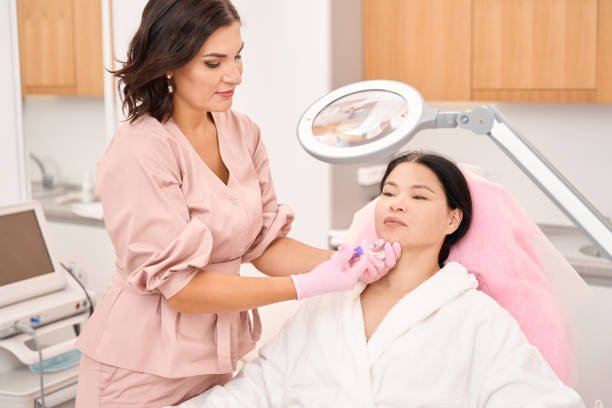
Juvederm Treatment in Dubai is most effective when the treatment plan is adapted to the individual rather than copied from a standard injection pattern. Doctors consider facial anatomy, proportions, tissue characteristics, previous treatments, and the patient’s aesthetic goals before selecting the appropriate Juvederm formulation, injection depth, and volume.
The same filler can produce very different outcomes in different faces. Personalization is what determines whether the treatment supports the patient’s existing features or creates an unnecessarily augmented appearance.
Why Personalized Juvederm Treatment in Dubai Matters
Every face has a different combination of skeletal structure, soft-tissue thickness, facial movement, volume distribution, and natural asymmetry.
Two patients may both request cheek enhancement but require completely different treatment strategies. One may need subtle anterior projection, while another may need a different approach because their facial width, midface volume, or existing filler changes the overall anatomy.
This is why a consultation should focus on the patient’s face rather than simply on the name of the treatment.
Personalization Starts With the Patient’s Goal
Patients often describe their concerns in visual terms:
- “My face looks tired.”
- “My cheeks look flat.”
- “My lips are uneven.”
- “My jawline isn’t defined.”
- “My chin looks recessed.”
- “I have lost facial volume.”
The doctor’s role is to determine what anatomical factors may be contributing to that appearance.
A request for more volume does not automatically mean that more filler is the appropriate solution.
How Doctors Assess the Face Before Juvederm
A detailed assessment may involve examining the face from frontal, profile, and three-quarter views.
The doctor may evaluate:
- Facial width and vertical proportions
- Cheek projection
- Midface volume
- Chin projection
- Jawline definition
- Lip proportions
- Existing asymmetry
- Skin quality
- Soft-tissue thickness
- Dynamic facial movement
- Previous cosmetic procedures
The assessment can also include a review of previous dermal filler treatments. Existing filler can affect tissue volume, contour, and injection planning.
Static and Dynamic Assessment
A face should not only be evaluated while completely relaxed.
The doctor may observe how the patient’s features change while smiling, talking, pursing the lips, or making other natural expressions.
This matters particularly in highly mobile areas such as the lips and around the mouth.
A treatment that looks acceptable when the face is still may behave differently during expression if excessive volume is introduced into a mobile area.
How Doctors Choose the Right Juvederm Formulation
“Juvederm” refers to a range of hyaluronic acid-based filler formulations rather than one identical product.
Different formulations have different physical properties and approved indications. Official JUVÉDERM information identifies products for specific applications involving areas such as the cheeks, chin, jawline, lips, facial folds, temples, and infraorbital region.
Therefore, product selection should follow the treatment objective.
Filler Characteristics Matter
Depending on the intended application, the doctor may consider:
- Desired projection
- Degree of structural support
- Tissue thickness
- Treatment depth
- Mobility of the area
- Desired softness
- Contouring requirements
- Specific product indication
A filler designed for a particular facial area should not automatically be substituted for another simply because both contain hyaluronic acid.
How Injection Depth Is Personalized
The face contains multiple tissue layers, and the appropriate injection plane depends on the treatment area, anatomy, product, and intended result.
Some treatment objectives require deeper structural placement, while others may involve more superficial placement.
The decision should be based on anatomy rather than a universal rule such as “deep filler is always better.”
Why Injection Technique Changes the Result
The same quantity of filler can produce different visual effects depending on where and how it is deposited.
The practitioner may use a needle or cannula depending on the area and clinical circumstances. The choice of device is part of the overall injection strategy rather than a guarantee of safety or superior results.
The official JUVÉDERM information states that its products are injected using a needle or cannula, depending on the product and treatment application.
How Doctors Personalize Filler Volume
More filler does not necessarily mean a better result.
Volume should correspond to the patient’s anatomy and the degree of correction required. A patient with mild volume loss may need substantially less product than someone with significant structural or soft-tissue changes.
Doctors may therefore use a conservative approach and reassess the result rather than attempting to achieve maximum correction during one appointment.
Why Staged Treatment Can Be Useful
Some patients benefit from treating one area first and reassessing the overall facial balance afterward.
This can help prevent cumulative overcorrection.
For example, adding cheek volume may change how the lower face is perceived. After that change is evaluated, the doctor may decide that additional treatment to another area is unnecessary.
Personalization and Facial Asymmetry
Minor facial asymmetry is normal.
One cheek may sit slightly higher than the other, the lips may have different volumes on each side, or the chin may sit subtly off-center.
The objective of personalized Juvederm treatment is not to force every face into perfect symmetry.
Correcting What Matters Visually
A doctor may identify asymmetries that are noticeable but decide that they do not justify treatment.
If correction is appropriate, the amount of filler may differ between the two sides.
This is another reason standardized “same amount on both sides” approaches may not produce the most balanced result.
How Previous Filler Changes the Treatment Plan
Previous filler is an important part of the clinical history.
A patient may have residual product even when they believe it has completely disappeared. Previous injections can also influence tissue planes and contour.
Before adding new filler, a doctor may assess:
- Where previous filler was placed
- Which product was used, if known
- When it was injected
- Whether any complications occurred
- Whether residual volume remains
- Whether additional treatment is actually required
If the history is unclear, conservative planning becomes particularly important.
Personalized Juvederm Treatment in Dubai for Different Facial Concerns
The treatment strategy changes depending on the concern being addressed.
| Patient concern | What the doctor may assess | Personalization considerations |
|---|---|---|
| Flat-looking cheeks | Midface volume and projection | Facial width and desired contour |
| Receding chin | Profile and lower-face proportions | Chin-to-lip and chin-to-jaw relationship |
| Thin lips | Lip anatomy and movement | Proportion, definition, and mobility |
| Weak jawline | Lower-face structure | Chin projection and mandibular contour |
| Facial hollowing | Volume distribution | Cause, location, and surrounding structures |
| Facial asymmetry | Right-to-left differences | Whether correction would improve overall balance |
| Visible folds | Adjacent facial volume | Whether direct filling or another approach is more appropriate |
The table illustrates an important principle: the same symptom can have different anatomical causes.
Why Doctors Avoid Treating Every Facial Line
Aging does not occur as a series of isolated lines appearing independently.
Changes in facial volume, tissue position, skin quality, muscle activity, and structural support can interact.
Consequently, a visible fold does not necessarily mean the fold itself should receive a large amount of filler.
A doctor may instead evaluate the surrounding anatomy before deciding whether direct correction is appropriate.
Safety Is Part of Personalization
Personalization is not only about aesthetics.
Facial anatomy also determines where important blood vessels and other structures may be located. Consensus recommendations emphasize the importance of detailed anatomical knowledge and appropriate injection technique when performing dermal filler procedures.
The JUVÉDERM safety information warns that unintended injection into a blood vessel can result in serious complications, including vascular occlusion, tissue injury, and visual or neurological complications.
This makes appropriate practitioner training and anatomical knowledge fundamental considerations when selecting an injector.
How Dubai Lifestyle Factors Into Treatment Planning
Dubai’s climate and lifestyle can affect how patients schedule cosmetic procedures.
High outdoor temperatures, intense sun exposure, frequent air-conditioned environments, professional commitments, and travel can all influence treatment timing and aftercare planning.
Patients with an upcoming wedding, business event, holiday, or major social occasion should allow sufficient time for expected temporary swelling or bruising to settle rather than scheduling treatment immediately before the event.
A personalized plan therefore considers not only the face but also the patient’s schedule.
For patients researching broader aesthetic options in Dubai, Tajmeels Clinic provides information about cosmetic and aesthetic services available through its clinic.
Questions to Ask About Personalized Juvederm Treatment
A consultation becomes more useful when patients understand why a specific treatment plan has been recommended.
Consider asking:
- What specific facial feature are we trying to improve?
- What anatomical factors contribute to it?
- Which Juvederm formulation is appropriate?
- Why was this product selected?
- Where will the filler be placed?
- What injection plane is being considered?
- How much product is actually necessary?
- Do I have existing filler that could affect the result?
- Would treating another area first create a better balance?
- What alternatives are available if filler is not the best option?
These questions encourage treatment based on clinical reasoning rather than predetermined filler packages.
When Personalized Treatment May Mean Saying No
A responsible injector should not treat every request automatically.
Treatment may need to be delayed or reconsidered if the patient’s expectations are unrealistic, the desired change cannot reasonably be achieved with filler, an alternative treatment would be more appropriate, or there are relevant medical or anatomical concerns.
The decision not to inject can be just as important as the decision to proceed.
The Strategic Investment: A Plan Built Around Your Face
Juvederm Treatment in Dubai should be approached as an individualized medical aesthetic procedure rather than a standardized volume-adding service. Facial anatomy, proportions, tissue characteristics, existing filler, product properties, injection technique, and the patient’s desired level of correction all influence the treatment plan.
The strongest results come from selecting the right intervention for the right anatomical problem—not from using the greatest possible amount of filler.
Patients considering treatment can explore aesthetic services and consultation information through Tajmeels Clinic.