Automotive manufacturing is becoming increasingly focused on precision, material efficiency, lightweight components, and faster production. As vehicles incorporate more complex designs and manufacturers work with a wider range of materials, traditional cutting methods are being complemented by advanced manufacturing technologies. Waterjet cutting is one such technology gaining attention across automotive component production.
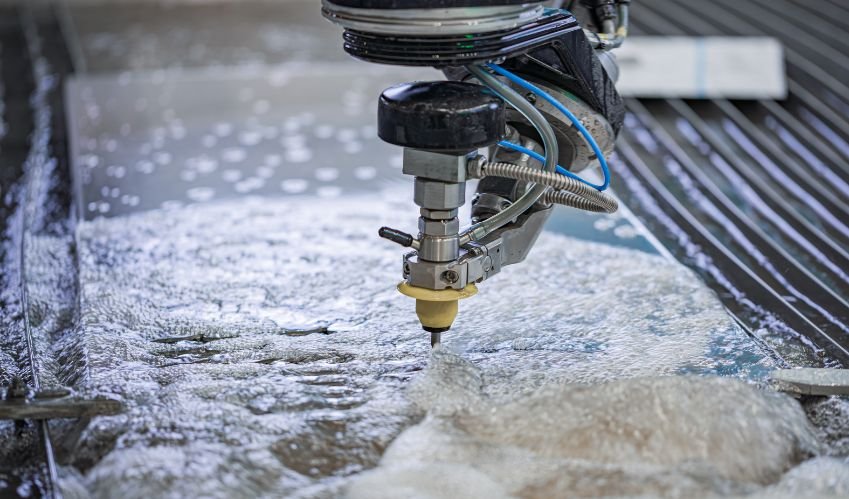
Waterjet cutting uses a high-pressure stream of water, sometimes mixed with an abrasive material, to cut through different types of materials. Unlike thermal cutting technologies, the process does not rely on heat to remove material. This makes it useful for applications where manufacturers need accurate cuts while limiting heat-related deformation.
According to Expert Market Research, the global waterjet cutting machines market was valued at USD 1.38 billion in 2025 and is projected to reach USD 2.54 billion by 2035, growing at a CAGR of 6.30% between 2026 and 2035. The increasing adoption of precision manufacturing technologies across automotive production is expected to contribute to this growth.
Precision Is Becoming More Important in Automotive Manufacturing
Modern automotive components often require complex shapes, accurate dimensions, and consistent quality. Even small variations in a component can affect assembly, performance, or the overall appearance of a vehicle.
Waterjet cutting provides manufacturers with a computer-controlled cutting process that can produce intricate shapes and profiles. CNC technology allows cutting paths to be programmed according to digital designs, helping manufacturers maintain consistency across production runs.
This precision is particularly useful during the production of prototypes, customised components, and parts with complex geometries.
Cold Cutting Reduces Heat-Related Problems
One of the key advantages of waterjet cutting is its cold-cutting nature. Processes such as laser and plasma cutting generate significant heat, which can sometimes cause thermal distortion, changes in material properties, or heat-affected zones.
Waterjet cutting removes material mechanically through a high-pressure water stream and abrasive particles rather than relying on thermal energy. This can make it suitable for components where maintaining the original properties of the material is important.
For automotive manufacturers, reducing heat-related deformation can simplify subsequent machining and finishing operations.
Supporting Lightweight Vehicle Design
The automotive industry is increasingly focused on reducing vehicle weight to improve fuel efficiency and electric vehicle range. This has encouraged manufacturers to use lightweight materials such as aluminium, composites, and advanced alloys.
Waterjet machines can cut a wide range of materials, making them useful for different stages of automotive component manufacturing. Abrasive waterjet systems can handle harder materials, while pure waterjet systems can be used for softer materials.
The ability to work with different materials provides manufacturers with greater flexibility when developing lightweight components and assemblies.
Waterjet Cutting Supports Complex Automotive Designs
Vehicle designs are becoming more sophisticated, and this is reflected in the shape of individual components. Manufacturers increasingly need cutting systems that can produce curves, angles, holes, and other complex profiles.
CNC-controlled waterjet machines can follow detailed digital cutting paths, allowing manufacturers to create intricate component shapes. This flexibility is valuable for prototypes and low-volume production, where manufacturers may need to make frequent design changes.
Instead of investing in dedicated tooling for every new design, manufacturers can modify digital cutting instructions and produce updated components.
Reducing Material Waste
Material utilisation is another important consideration in automotive manufacturing. Scrap increases production costs and can create additional environmental challenges.
Waterjet cutting can help manufacturers optimise cutting patterns and use materials efficiently. CNC systems can arrange multiple component shapes on a sheet according to the required production specifications, potentially reducing unused material.
This is particularly useful when manufacturers are working with expensive metals, composites, or other specialised materials.
Faster Prototyping and Product Development
Automotive manufacturers frequently develop new components and modify existing designs. Physical tooling can make this process expensive and time-consuming, particularly when a design is still being tested.
Waterjet cutting can support rapid prototyping by allowing components to be produced directly from digital designs. Engineers can modify a CAD model and create a new cutting program without necessarily developing entirely new tooling.
This can shorten the design-test-modification cycle and allow manufacturers to evaluate different component concepts more efficiently.
Applications Across Automotive Components
Waterjet cutting can be applied to several areas of automotive component manufacturing. Depending on the material and production requirements, manufacturers may use the technology for interior components, body panels, gaskets, brackets, dashboards, floor components, and other parts.
It can also be used for cutting composite materials and insulation products used within vehicles. The ability to work with different materials gives waterjet systems a broad role in manufacturing environments.
The technology is particularly attractive where component geometry is complex or where thermal cutting could negatively affect the material.
Waterjet Cutting and Electric Vehicle Manufacturing
The growth of electric vehicles is creating new manufacturing requirements. EVs contain large battery systems, thermal management components, electrical systems, and lightweight structural components.
Battery-related manufacturing requires precise cutting of different materials and components. Waterjet technology can potentially support the production of certain battery-related parts and surrounding components where controlled cutting and minimal thermal impact are desirable.
EV manufacturers are also placing greater emphasis on weight reduction. Waterjet cutting can support the use of lightweight materials by providing a flexible method for producing complex shapes.
Automation Is Improving Waterjet Manufacturing
The integration of automation and digital technologies is making waterjet cutting more efficient. Modern systems can combine CNC controls, automated material handling, software-based nesting, and monitoring technologies.
Automation can reduce manual intervention and improve consistency across production processes. Manufacturers can also integrate waterjet systems into broader digital manufacturing environments, connecting cutting operations with CAD, production planning, and quality-control systems.
As smart manufacturing expands, these capabilities are likely to become increasingly important.
Challenges and Considerations
Despite its advantages, waterjet cutting is not suitable for every automotive application. The equipment can require significant initial investment, and operating costs can include water, abrasive materials, maintenance, and energy consumption.
Cutting speed can also vary depending on material thickness, hardness, and the required level of precision. Manufacturers therefore need to evaluate the overall economics of waterjet cutting against alternatives such as laser, plasma, milling, or mechanical cutting.
The best results are achieved when manufacturers select the cutting technology according to the material, component design, production volume, and required tolerances.