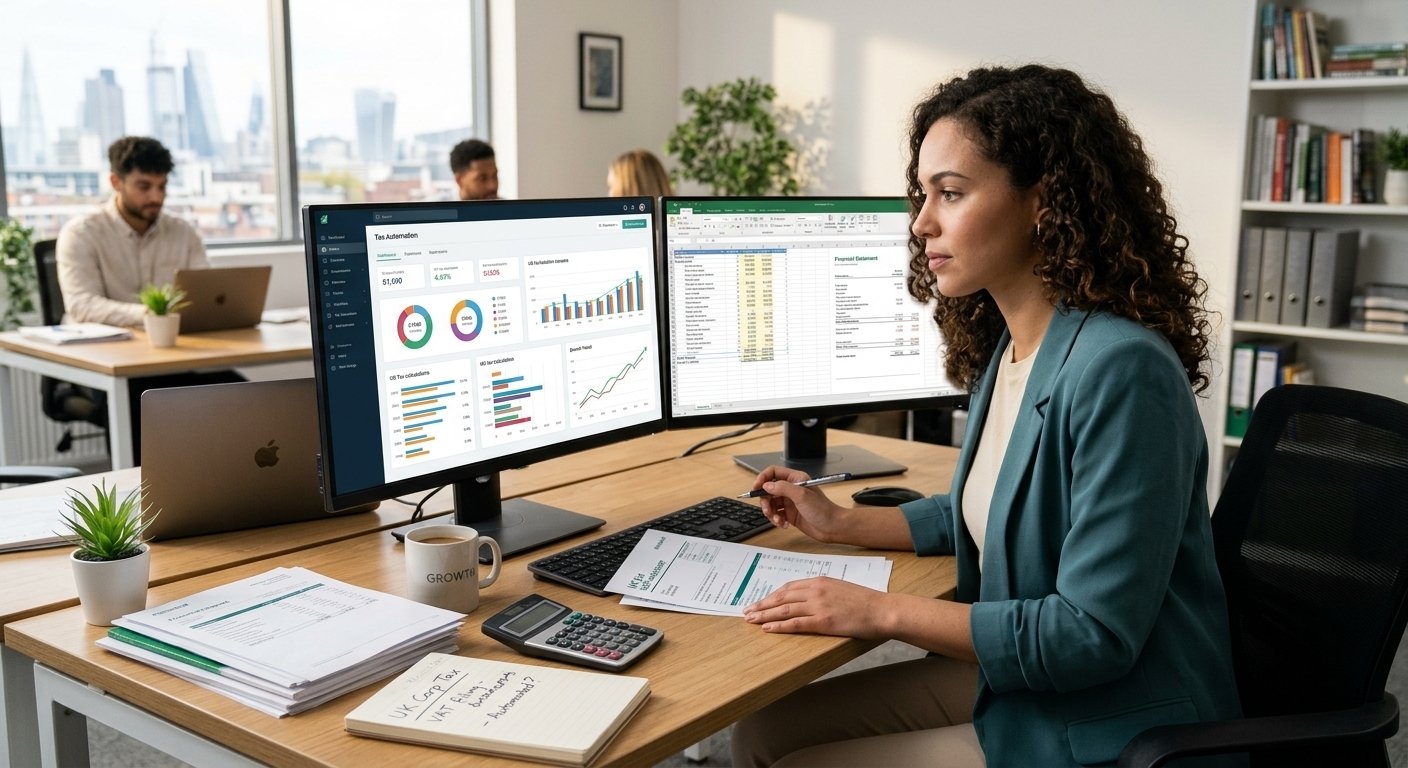
It’s Sunday evening. You’re at the kitchen table with a pile of receipts, three half-finished spreadsheets, and a vague memory that a payment was due sometime this month. If you’re a landlord, freelancer, sole trader or gig worker, you probably know the scene.
For years, this was just how self-employed life worked: tax was the thing you dealt with at the last minute, usually with a bit of dread. That’s changing quickly. More people are moving their tax admin into digital tools, and it isn’t just because they’re convenient. The rules, the penalties and the expectations around record-keeping have all shifted.
The Big Driver: Making Tax Digital
The biggest reason for the move is Making Tax Digital (MTD), HMRC’s programme to bring tax reporting online. Making Tax Digital for sole traders and landlords is being phased in through MTD for Income Tax Self Assessment. Under the timetable HMRC has published, people with qualifying income (the total of self-employment and property income) above £50,000 were first, from April 2026. The threshold then drops to £30,000 from April 2027 and £20,000 from April 2028.
If you’re under those thresholds today, it’s tempting to file this under “someone else’s problem.” But the thresholds are falling, and the practical requirements are worth understanding early:
- Digital records: Income and expenses must be kept in compatible software rather than on paper or in a standalone spreadsheet that isn’t linked to anything.
- Quarterly updates: Instead of one annual return, you send HMRC summaries of your income and expenses through the year.
- A final declaration: After the tax year ends, you confirm your full position and finalise your tax bill.
This is a different rhythm from the annual scramble. Done well, it means small, regular check-ins rather than one enormous deadline. Done badly, it means four chances a year to miss something. That’s exactly why so many people are looking for software that handles the heavy lifting.
Rules and thresholds can change, so always check the latest guidance on GOV.UK to confirm how MTD applies to you.
Why Spreadsheets Are Reaching Their Limit
Spreadsheets have served a lot of small businesses well. They’re flexible and familiar. But they weren’t built for the way HMRC now expects information to flow.
The common problems are easy to recognise:
- Manual copying. Every time you retype a figure from a bank statement or invoice, you create a chance for a typo.
- No built-in checks. A spreadsheet will happily let you put a personal expense in the wrong column or forget a month entirely.
- Version chaos. “Accounts_final_v3_REAL.xlsx” is funny until you can’t remember which one you submitted.
- No prompts. Nothing tells you a deadline is coming.
None of this means spreadsheets are bad. It means the cost of small mistakes has gone up.
Penalties: The Part Nobody Enjoys Talking About
HMRC’s penalty system has moved towards a points-based approach for late submissions. You collect a point each time you miss a submission deadline, and once you reach the threshold, a financial penalty follows. Late payments can also trigger charges and interest, and those add up faster than most people expect.
For a landlord with several properties, or a freelancer with irregular income, the risk isn’t usually carelessness. It’s that life is busy, records are scattered, and deadlines blur together. Digital tools reduce that risk in a few practical ways:
- Deadline reminders so you aren’t relying on memory.
- Automatic categorisation of income and expenses, which makes errors less likely.
- Organised, timestamped records that are easy to retrieve if HMRC ever asks questions.
- Estimated tax figures that update as you go, so a bill never lands as a surprise.
That last point matters more than it sounds. Many sole traders say their biggest tax stress isn’t the form. It’s not knowing how much to set aside.
It’s Not Just About Compliance: It’s About Your Time
Most of us don’t go self-employed because we love admin. We do it for flexibility, for independence, or to build something of our own. Then the paperwork quietly eats the weekends.
This is the lifestyle angle that often gets overlooked. People who’ve moved to digital tax tools frequently describe the same benefits:
- Evenings back: Instead of a four-hour tax session once a year (or once a quarter), bookkeeping becomes five minutes here and there. Receipts are snapped on your phone, bank transactions sync automatically, and the system does the sorting.
- Less mental load: Even when you’re not working on your taxes, they sit in the back of your mind. Knowing everything is up to date, and that you’ll be reminded before anything is due, removes a surprising amount of background anxiety.
- Better decisions: When your numbers are current, you can answer real questions. Can I afford to take a week off? Should I raise my rates? Is this property actually profitable once repairs are counted? That’s something a once-a-year tax return never gave you.
Who’s Switching, and Why
Different groups arrive at digital tools for different reasons.
- Landlords often start with a single buy-to-let and end up juggling rental income, mortgage interest, repairs, letting agent fees and insurance across several properties. Splitting and tracking those costs accurately matters, especially with the restrictions on how finance costs are treated.
- Freelancers and sole traders deal with fluctuating invoices, late-paying clients and a mix of business and personal spending. Clear, consistent records help separate the two.
- Gig workers (drivers, couriers, delivery riders, creators) may earn across several platforms. Each one reports differently, and the income only makes sense when it’s combined in one place.
- People with multiple income streams are perhaps the fastest-growing group. A salaried job, a side business and a rental property can all sit in the same tax year, and the quarterly reporting rules look at self-employment and property income together.
What to Look for in Tax Automation Software
If you’re searching for tax automation software, it’s easy to be overwhelmed by options. A few questions can cut through the noise:
- Is it compatible with Making Tax Digital? If it can’t connect to HMRC’s systems, it won’t solve the core problem.
- Does it fit your situation? A tool built for limited companies may not suit a landlord or a sole trader.
- How easy is it to use? If it feels like another chore, you won’t keep up with it.
- Is it secure? You’re handing over financial data, so look for clear information about data protection and UK GDPR compliance.
- What does it cost, and what’s included? The best affordable options are transparent about pricing, with no surprise add-ons when you reach quarterly submissions.
- Can you get help? Accessible, UK-based support is worth more than a long feature list when something goes wrong near a deadline.
Searching for “best affordable tax software for landlords” or “tax automation for freelancers UK” is a reasonable start. Just remember that cheapest isn’t automatically the best value. A tool that saves you one missed deadline or one avoidable penalty can easily pay for itself.
Where Taxara Ltd Fits In
This is the gap that Taxara Ltd was built to address. Taxara is a UK SaaS company focused on tax automation for the people most affected by the move to digital reporting: sole traders, landlords, freelancers and gig workers who want to stay compliant without becoming part-time accountants.
The aim is straightforward. Keep your records organised as you go, make quarterly updates less daunting, and help you see where you stand before deadlines arrive. For people preparing for Making Tax Digital as sole traders, that can turn an unfamiliar process into a manageable routine.
As with any financial software, it’s worth exploring options, checking what fits your circumstances and speaking to an accountant if your situation is complex. Software can automate a great deal, but it works best alongside good professional advice when you need it.
Practical Steps to Get Ready
Whether you choose Taxara or another solution, these steps will put you in a stronger position:
- Check your income against the MTD thresholds to see when the rules apply to you.
- Separate business and personal banking if you haven’t already. It makes everything simpler.
- Start recording digitally now. Don’t wait for the deadline to arrive.
- Set aside tax regularly, even a fixed percentage of each payment.
- Keep receipts and invoices in one place, ideally linked to the transaction they relate to.
- Review your figures monthly. A short, regular habit beats an annual panic.
The Bottom Line
The shift to digital tax tools isn’t a passing trend. It’s a response to new rules, higher stakes for mistakes, and a simple human wish for less stress. Landlords, freelancers, sole traders and gig workers are discovering that good software doesn’t just keep HMRC happy. It gives time back.
The best moment to build better habits is before the pressure starts. Get your records in order, understand what’s coming, and choose a tool that fits how you actually work. Your future self, on a quiet Sunday evening with no receipts in sight, will thank you.