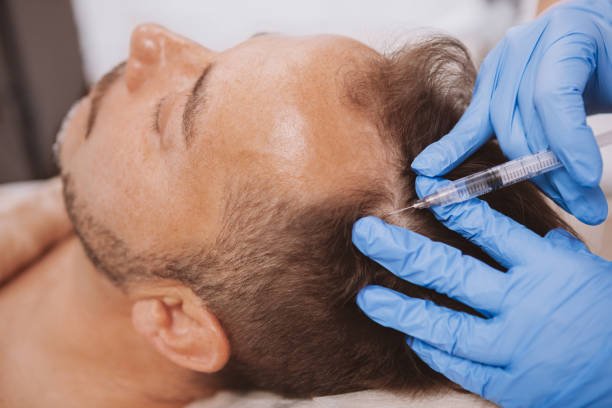
PRP stands for platelet-rich plasma. It contains a concentrated amount of platelets, which release growth factors involved in tissue repair and cellular communication. In hair restoration, these growth factors may help create a more supportive environment for existing hair follicles. Although results vary from person to person, PRP may be considered by individuals experiencing certain types of hair thinning.
Understanding how this treatment works, who may benefit, and what results to expect can help people make informed decisions about their hair restoration goals.
What Is PRP Treatment for Hair Growth?
Platelet-rich plasma is produced by processing a small blood sample to separate the platelet-rich portion from other blood components. Platelets contain biologically active substances that participate in the body’s natural healing and repair processes.
During PRP hair treatment, the prepared plasma is administered into selected areas of the scalp. The objective is to deliver concentrated platelets near hair follicles that may benefit from additional biological stimulation.
PRP is not a hair transplant and does not introduce new hair follicles into the scalp. Instead, it aims to support existing follicles and improve conditions associated with hair growth. Its effectiveness depends on factors such as the cause of hair loss, the condition of the follicles, and the individual’s response to treatment.
How Does PRP Treatment In Abu Dhabi Stimulate Hair Growth?
Supporting Hair Follicle Activity
Hair follicles naturally move through different growth stages. These include the anagen phase, when hair grows actively; the catagen phase, which is a transitional stage; and the telogen phase, when hair rests before eventually shedding.
Certain forms of hair loss can disrupt this cycle, causing more hairs to enter the resting phase or producing progressively thinner strands. PRP treatment aims to support the biological activity of existing follicles through the growth factors released by platelets.
Research suggests that PRP may improve hair density and thickness in some individuals, particularly those with androgenetic alopecia, commonly known as pattern hair loss. However, the treatment does not guarantee regrowth, and scientific findings vary depending on the treatment protocol and the characteristics of the individual.
Encouraging a Supportive Scalp Environment
Healthy hair growth depends on several factors, including follicle function, local tissue conditions, and the normal hair growth cycle. Growth factors released by platelets participate in cellular signalling and tissue maintenance.
By introducing platelet-rich plasma into selected scalp areas, treatment aims to encourage processes that may support follicular activity. This approach may be particularly relevant when follicles remain present but produce thinner hair.
The treatment is not intended to create follicles where none exist. Areas affected by advanced follicular loss may respond differently from areas where thinning hair and functioning follicles remain.
Potentially Improving Hair Thickness and Density
One of the main reasons people consider PRP is the possibility of improving the appearance of thinning hair. Some individuals experience increased hair density, thicker strands, or reduced shedding after completing a treatment course.
These changes generally develop gradually rather than immediately. Hair follicles require time to move through their natural growth cycles, so visible improvement may take several months.
Results depend on the severity and cause of hair loss, the number of functioning follicles, and individual biological factors. Realistic expectations are important when considering PRP as part of a hair restoration plan.
Who May Benefit From PRP Hair Treatment?
PRP may be suitable for adults experiencing certain types of hair thinning, particularly pattern hair loss in its earlier stages. People who still have active hair follicles in affected areas may have a better opportunity to benefit than those with extensive, long-standing follicular loss.
Individuals experiencing gradual thinning around the crown, widening part lines, or reduced hair density may wish to explore whether PRP is appropriate for their situation.
However, not every type of hair loss responds in the same way. Hair thinning associated with nutritional deficiencies, hormonal changes, thyroid disorders, inflammatory scalp conditions, or other medical factors may require a different approach. Identifying the underlying cause is an important step before selecting treatment.
A qualified healthcare professional can assess the scalp, review the pattern of hair loss, and determine whether PRP is a reasonable option.
What Happens During PRP Treatment In Abu Dhabi?
Preparation of Platelet-Rich Plasma
The process usually begins with collecting a small blood sample. The sample is placed in a centrifuge, which separates its components according to their physical properties. The platelet-rich portion is then prepared for administration.
Preparation methods vary between treatment protocols. The platelet concentration and composition of the final preparation can influence how the procedure is performed.
Application to the Scalp
Once the plasma is ready, it is administered into selected areas of the scalp using small injections. The targeted areas are chosen according to the pattern of thinning and the treatment objectives.
The procedure is generally performed during an outpatient appointment. Its duration varies according to the size of the area being treated and the protocol used.
Planning Follow-Up Sessions
PRP hair restoration commonly involves multiple sessions rather than a single appointment. The interval between sessions depends on the treatment plan and the individual’s response.
Follow-up assessments help evaluate changes in hair density, thickness, and shedding. Standardised photographs and scalp examinations may help track progress more consistently than relying on memory alone.
How Long Does PRP Treatment Take to Show Results?
Hair growth is a gradual biological process, so improvement is not usually immediate. Some people may notice changes in shedding or hair texture within the first few months, while visible improvements in density can take longer.
A reasonable assessment period often extends across several months after treatment begins. The timing varies with the individual’s hair growth cycle, the underlying cause of thinning, and the treatment schedule.
It is important to distinguish between early changes and meaningful improvement in hair coverage. Continued monitoring can help determine whether the treatment is producing a noticeable benefit.
PRP may also require maintenance sessions to help preserve improvements. The need for ongoing treatment varies, and long-term outcomes are not identical for everyone.
How Can You Support Your Hair Restoration Goals?
A successful hair restoration plan starts with understanding why hair loss is occurring. A professional assessment can help distinguish pattern hair loss from other conditions that may require specific treatment.
It is also helpful to establish realistic goals before beginning PRP. For example, improving the thickness of existing hair may be more achievable than restoring a completely bald area.
Discussing previous hair loss treatments, the duration of thinning, and any changes in scalp health can help guide treatment planning. Progress should be evaluated over an appropriate period rather than judged after a single session.
PRP may be used as part of a broader, medically guided hair restoration approach when appropriate. The suitability of combining treatments depends on the diagnosis and the individual’s needs.
Frequently Asked Questions About PRP Treatment In Abu Dhabi
How does PRP treatment help with hair growth?
PRP delivers concentrated platelets to selected scalp areas. The growth factors released by these platelets may support follicular activity and improve hair density in some people. The response varies according to the type and severity of hair loss.
Is PRP treatment effective for thinning hair?
PRP may improve hair density and thickness in some individuals with pattern hair loss. However, results are variable, and treatment is generally more promising when functioning follicles remain in the affected areas.
How many PRP sessions are needed for hair growth?
Several sessions are commonly recommended during the initial treatment course. The exact number and spacing depend on the treatment protocol, the extent of thinning, and the individual’s response.
When can you see results from PRP treatment?
Changes may become noticeable over several months. Hair growth takes time, and improvements in density may develop gradually. Follow-up assessments can help evaluate the response.
Can PRP restore hair in completely bald areas?
PRP does not create new hair follicles. It may support existing follicles, but completely bald areas with extensive follicular loss are generally less likely to respond meaningfully.
Is PRP treatment suitable for both men and women?
PRP may be considered for men and women experiencing certain types of hair thinning. Suitability depends on the cause of hair loss, the condition of the scalp, and the presence of functioning follicles.
Does PRP treatment provide permanent hair regrowth?
PRP should not be considered a guaranteed permanent solution. Some individuals experience sustained improvement, while others may need maintenance sessions or additional treatment to manage ongoing hair loss.
Conclusion
PRP Treatment In Abu Dhabi offers a nonsurgical option for people seeking to improve hair density and support existing hair follicles. By using platelet-rich plasma, the treatment aims to deliver growth factors that may contribute to follicular activity and a healthier environment for hair growth.
Its benefits are most relevant to selected individuals with thinning hair and functioning follicles. Outcomes depend on the underlying cause of hair loss, the treatment protocol, and individual response. A proper assessment, realistic expectations, and consistent follow-up are essential for determining whether PRP fits a person’s hair restoration goals.