
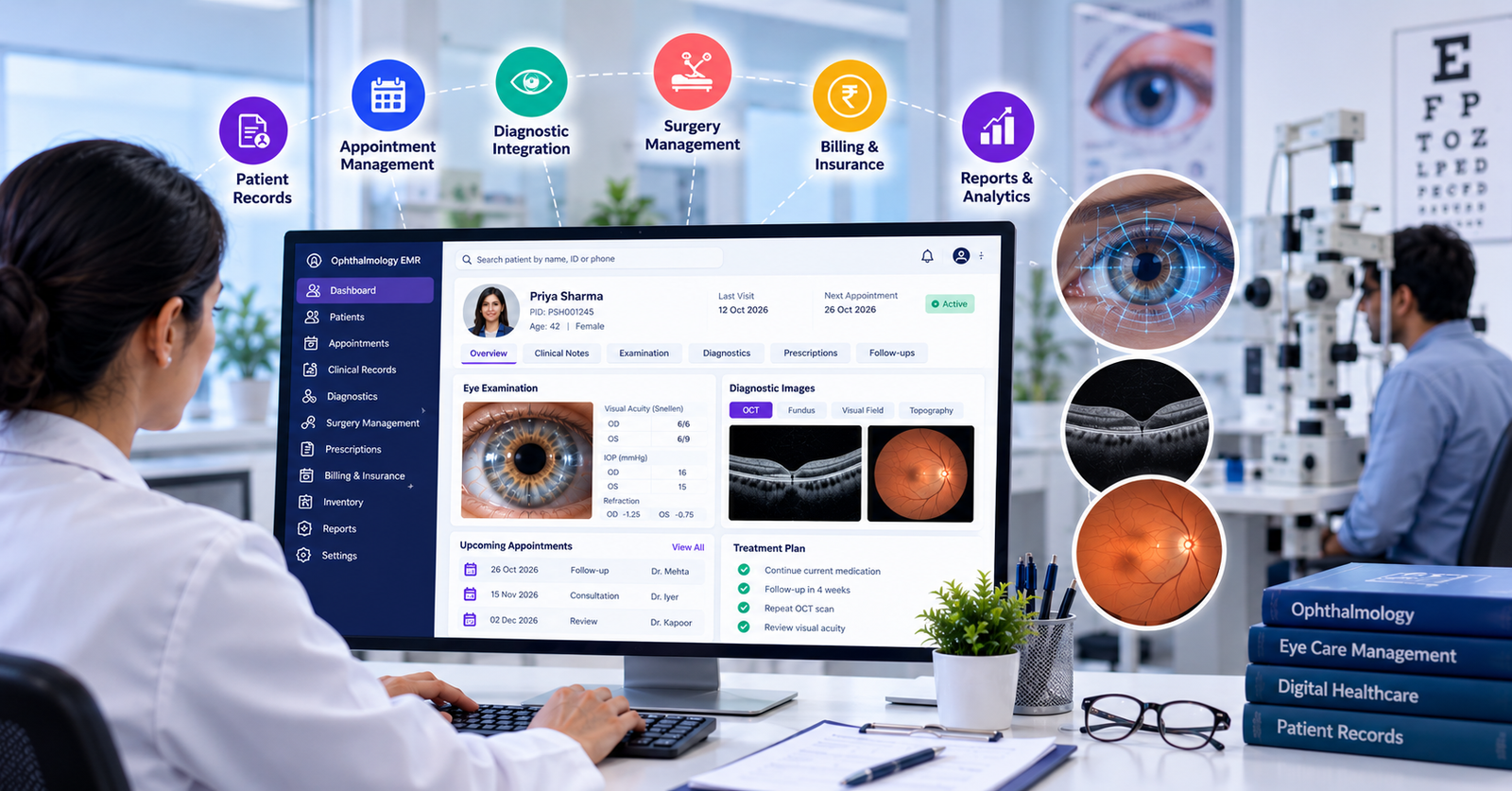
The eye care sector in India is evolving as hospitals and clinics adopt digital solutions to improve patient management, organize clinical information, and streamline daily operations. From independent ophthalmology clinics to multi-specialty hospitals, healthcare providers increasingly need reliable systems to manage appointments, diagnostic reports, prescriptions, billing, and follow-up care.
Traditional paper-based processes can make it difficult to retrieve patient histories, coordinate departments, and maintain consistent documentation. Digital healthcare platforms offer an alternative by bringing essential information and administrative workflows into a more organized environment.
Understanding the role of digital technology can help eye care providers make informed decisions about improving operational efficiency and delivering a more coordinated patient experience.
Why Digital Transformation Matters in Eye Care
Ophthalmology practices manage detailed clinical information throughout the patient journey. This may include visual acuity measurements, medical histories, eye examination findings, diagnostic images, prescriptions, treatment plans, and post-operative records.
When these details are stored across paper files or disconnected applications, healthcare professionals may spend additional time locating information and updating records. Administrative teams can also face challenges when coordinating appointments, billing, and follow-up visits.
Digital systems can help address these issues by centralizing relevant information and improving access for authorized users. They can also support consistent documentation, reduce repetitive data entry, and make routine administrative tasks easier to manage.
However, successful digital transformation depends on selecting technology that fits the clinic’s workflows, staff capabilities, and patient care requirements.
Understanding the Role of Ophthalmology EMR Systems
An Ophthalmology EMR system is designed to support the electronic documentation and management of clinical information within eye care practices. Depending on the platform, it may help healthcare professionals organize examination notes, medical histories, prescriptions, diagnostic findings, and treatment records.
For ophthalmologists, structured documentation can make it easier to review previous consultations and understand changes in a patient’s condition over time. Authorized staff may also benefit from improved coordination between consultations, diagnostic assessments, and follow-up appointments.
When evaluating a system, clinics should consider its usability, customization options, integration capabilities, data security, and suitability for their clinical workflows. Not every platform offers the same features, so providers should verify functionality before implementation.
The Growing Importance of Digital Eye Care in India
India has a diverse healthcare landscape, with eye care services delivered through specialist clinics, hospital networks, charitable institutions, and multi-specialty facilities. Managing patient information efficiently is important across these different care settings.
The adoption of Ophthalmology EMR in India can help practices move toward more structured clinical documentation and organized patient information management. Digital records may also support continuity of care when information needs to be reviewed during subsequent visits.
For hospitals operating across multiple branches, centralized systems and appropriate access permissions can improve coordination between locations, provided the platform supports these capabilities.
Healthcare organizations should also assess local implementation requirements, staff training, data protection, technical support, and applicable regulations. A carefully planned rollout can help ensure that digital tools support daily clinical activities rather than create unnecessary complexity.
Essential Features to Consider in Ophthalmology Software
Choosing suitable technology requires more than comparing prices or counting available features. Clinics should evaluate whether a platform can support their clinical and administrative needs.
1. Digital Patient Records
Organized patient records allow authorized healthcare professionals to review relevant medical histories, examination findings, prescriptions, and treatment information. Centralized documentation can reduce dependence on physical files and improve information retrieval.
2. Appointment and Follow-Up Management
Appointment scheduling tools can help staff coordinate doctor availability, manage patient queues, and organize follow-up visits. Reminder features, where available, may also help clinics communicate important appointment information to patients.
3. Diagnostic Information Management
Eye care practices may use specialized diagnostic equipment and imaging technologies. A suitable platform should make it easy to document and retrieve relevant reports and, where required, integrate with compatible diagnostic systems.
4. Billing and Administrative Coordination
Billing, payment tracking, insurance workflows, and financial reporting are important parts of clinic operations. Connecting these processes with patient administration can reduce duplicated work and improve visibility into routine activities.
5. Reporting and Analytics
Reports can help clinic administrators understand patient volumes, appointment patterns, revenue, and operational performance. The usefulness of these insights depends on data quality and the reporting capabilities available in the chosen system.
6. Security and Access Management
Healthcare information requires careful protection. Providers should evaluate user permissions, authentication, audit trails, backup arrangements, secure data handling, and applicable privacy requirements before adopting a platform.
How to Choose Ophthalmology Software in India
When comparing Ophthalmology software, eye hospitals and clinics should begin by identifying their current operational challenges. These may include fragmented patient records, scheduling difficulties, repeated data entry, limited reporting, or inefficient communication between departments.
The next step is to evaluate whether potential solutions can address those challenges. Consider the following factors:
- Ease of use: Doctors and staff should be able to learn the system without unnecessary difficulty.
- Clinical suitability: The platform should support the documentation and workflows required by the practice.
- Integration capabilities: Check whether it can connect with relevant diagnostic devices or existing healthcare applications.
- Scalability: Consider whether the solution can accommodate additional doctors, departments, or branches as the organization grows.
- Implementation and support: Evaluate onboarding, training, technical assistance, and ongoing maintenance.
- Data protection: Confirm how patient information is stored, accessed, protected, and backed up.
Selecting Ophthalmology software in India also involves checking the provider’s service availability, implementation approach, support arrangements, and ability to meet the organization’s regulatory and operational requirements. Clinics should request demonstrations and verify important capabilities before making a final decision.
How Digital Platforms Can Improve the Patient Journey
Technology can support several stages of the patient journey, beginning with appointment scheduling and registration and continuing through examination, treatment, billing, and follow-up.
When relevant information is organized and accessible to authorized staff, healthcare teams can spend less time searching for records and more time on patient-related activities. Better coordination may also reduce avoidable administrative delays and support a more consistent experience.
Nevertheless, software alone cannot guarantee better clinical outcomes. Patient care continues to depend on qualified healthcare professionals, appropriate clinical decisions, reliable processes, and responsible use of patient information.
Purple Sky Health and the Future of Digital Healthcare
Purple Sky Health provides a cloud-based digital healthcare platform designed to support activities such as patient record management, appointments, billing, insurance workflows, and analytics.
Healthcare organizations exploring digital transformation can review the platform’s available capabilities to determine whether they align with their operational requirements. As with any healthcare technology investment, clinics should assess functionality, security, implementation needs, and suitability before choosing a solution.
The future of eye care management will likely involve continued development in connected healthcare systems, digital documentation, analytics, and workflow automation. The priority should remain the practical use of technology to support healthcare professionals and create more organized patient management processes.
Conclusion
Digital healthcare technology is helping eye care providers rethink how they manage clinical documentation, appointments, diagnostic information, and administrative operations. With careful planning, appropriate training, and the right system, clinics can reduce manual workloads and improve coordination across their services.
By evaluating usability, ophthalmology-specific workflows, integration, security, and long-term scalability, healthcare organizations in India can make more informed decisions about digital adoption and build a stronger foundation for efficient eye care management.

