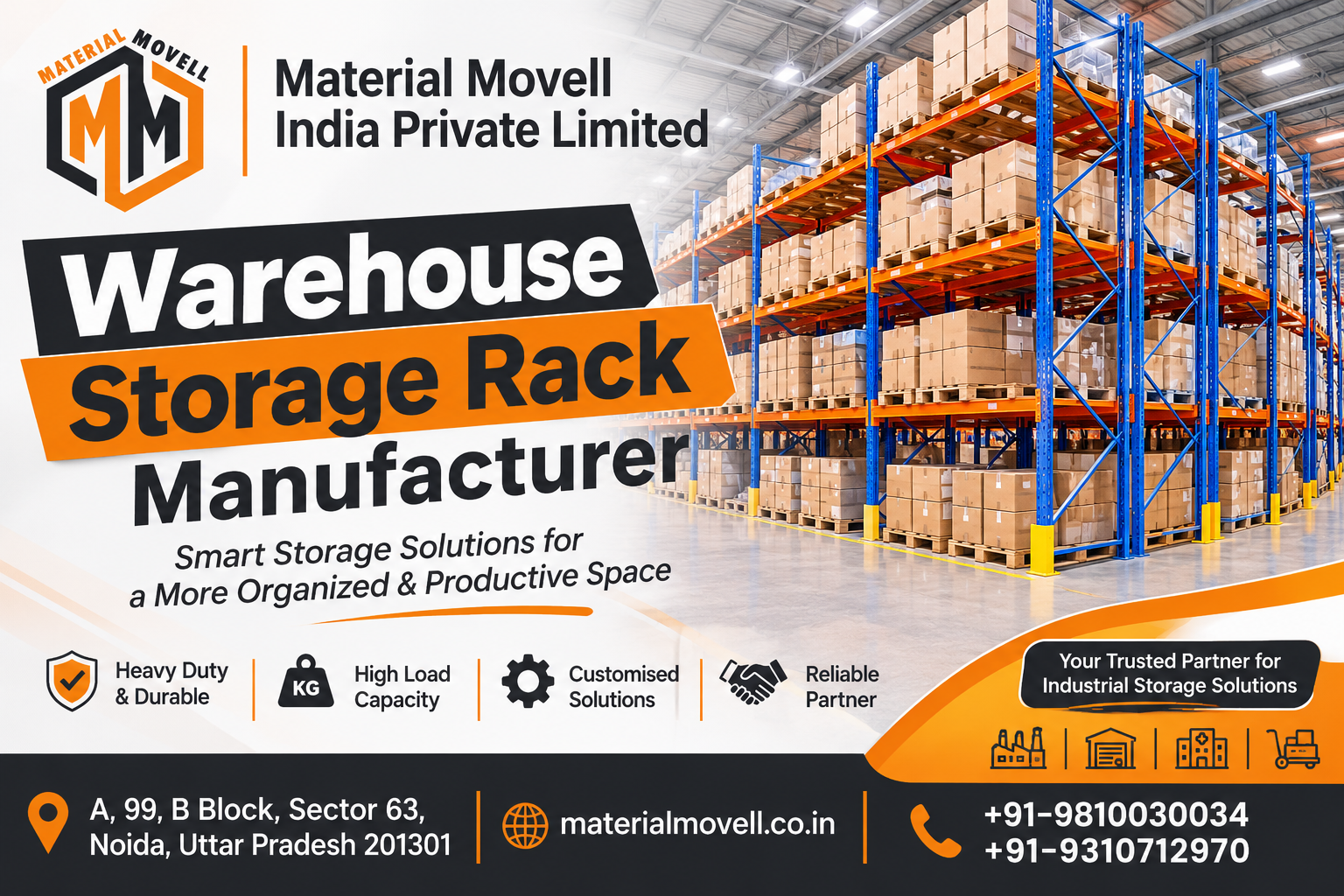
A warehouse storage rack manufacturer designs and fabricates steel racking systems that hold inventory safely, use vertical space well, and make picking faster. In India, the right manufacturer will customise racks to your load, aisle width, forklift or manual handling method, and product type, rather than selling a one-size-fits-all shelf. This guide covers the main rack types, their benefits, and what to check before you order.
Quick Answer
What does a warehouse storage rack manufacturer do?
A Warehouse Storage Rack Manufacturer designs, fabricates and supplies steel racking such as heavy duty racks, pallet racks, slotted angle racks and mezzanine systems. Good manufacturers study your load weight, space and handling method first, then supply racks built to that requirement. The result is safer storage, better space use and faster order picking.
Why Rack Choice Matters More Than Most Buyers Expect
Many warehouses start with whatever shelving is cheapest and available. Within a year, the problems show up: bent uprights, wasted height, slow picking and safety concerns.
A rack is not furniture. It is a load-bearing structure. If it is under-specified for the weight, or the beams are not matched to the pallet size, the damage shows up in your operations long before it shows up on an invoice.
Working with a dedicated warehouse storage rack manufacturer matters because the supplier takes responsibility for the design logic, not just the steel.
Main Types of Warehouse Storage Racks
- Heavy Duty Racks
Heavy duty racks are built for palletised and bulky goods. They suit factories, distribution centres and cold-chain-adjacent storage where loads are high and forklifts or stackers are in daily use.
Best for: pallets, drums, large cartons, bulk raw material.
- Slotted Angle Racks
Slotted angle racks are bolt-together, adjustable and economical. Shelf heights can be changed as your stock changes.
Best for: spare parts, small components, packaged goods, stores and light to medium loads.
- FIFO (First In, First Out) Racks
FIFO racks load from one side and unload from the other, so the oldest stock leaves first. This matters for any product with batch tracking, shelf life or expiry control.
Best for: food and beverage, pharma packaging, chemicals, date-sensitive inventory.
- Mezzanine Floors
A mezzanine adds a second working level above existing floor space. It is useful when your floor area is fixed but ceiling height is available.
Best for: adding storage, picking or packing space without moving to a bigger facility.
Quick Comparison Table
| Rack Type | Load Level | Best Use | Key Advantage |
| Heavy duty rack | High | Pallets, bulk goods | Strength and forklift compatibility |
| Slotted angle rack | Light to medium | Parts, cartons, stores | Adjustable and economical |
| FIFO rack | Medium to high | Dated or batch stock | Automatic stock rotation |
| Mezzanine floor | Varies by design | Space expansion | Uses vertical height |
Exact load capacities depend on the design and must be confirmed with the manufacturer for your specific project.
Key Benefits of Working With a Warehouse Storage Rack Manufacturer
Better Use of Space
Racking lets you store upward instead of outward. For warehouses where rent or land cost is a pressure, this is often the single biggest gain.
Safer Storage
Properly designed racks keep heavy goods off the floor, reduce stack collapses and lower the risk of product damage. Safety also depends on correct installation and not exceeding rated loads.
Faster Picking and Inventory Control
Organised, labelled bays make it easier to find stock, count it and move it. Even small layout improvements can cut walking time for pickers.
Customisation
Standard sizes rarely fit every operation. A manufacturer can adjust bay width, beam levels, depth and finish to match your products and handling equipment.
Long-Term Value
Racks are a capital purchase. A well-fabricated system is usually cheaper over its life than one that needs frequent repair or early replacement.
How to Choose the Right Warehouse Storage Rack Manufacturer
Use this checklist when you compare suppliers:
- Ask about design input. Will they review your load, product dimensions and aisle layout before quoting?
- Check the materials and finish. Ask about steel grade and coating suited to your environment, such as humidity or dust.
- Request clear load information. Capacity per beam level and per bay should be stated, not guessed.
- Confirm installation support. Poor installation can undo good design.
- Look at local presence. A manufacturer in the Delhi NCR region, such as Noida, can be easier to visit, inspect and coordinate with.
- Review similar projects. Ask what kinds of storage setups they have handled.
Expert tip: Measure your tallest, heaviest pallet and your narrowest aisle before you call. Those three numbers shape almost every rack decision.
A Practical Example
Take a mid-sized parts distributor storing mixed cartons on the floor. Picking is slow and the top stacks are unsafe. A sensible fix might be slotted angle racks for small parts, heavy duty racks for pallet stock, and a mezzanine for packing if floor space is tight.
The point is not to buy every rack type. It is to match each product group to the rack built for it.
Industries That Commonly Use Warehouse Racks
- Manufacturing and engineering units
- Logistics and 3PL warehouses
- Retail and e-commerce fulfilment
- Auto parts and spares storage
- FMCG and packaged goods
- Pharma packaging and stores
Common Mistakes to Avoid
- Choosing by price per rack without checking load ratings
- Ignoring future stock growth
- Skipping aisle width planning for forklifts
- Overloading beams beyond the rated limit
- Forgetting regular inspection after installation
Frequently Asked Questions
- What is a warehouse storage rack manufacturer?
A warehouse storage rack manufacturer designs and fabricates steel racks for storing goods in warehouses, factories and stores. They supply systems such as heavy duty racks, slotted angle racks and mezzanine floors, often customised to your space and load.
- Which warehouse rack type is best for heavy loads?
Heavy duty racks are generally used for heavy and palletised loads. The right choice still depends on your pallet weight, dimensions and handling equipment, so confirm capacity with the manufacturer before ordering.
- What is the difference between heavy duty racks and slotted angle racks?
Heavy duty racks are built for high loads and forklift handling. Slotted angle racks are adjustable and economical, and suit lighter items such as parts and cartons.
- How do I choose a warehouse rack manufacturer in India?
Check design support, material quality, stated load capacity, installation help and relevant project experience. Visiting the facility or discussing your layout directly helps you judge whether they understand your needs.
- Can warehouse racks be customised?
Yes. Bay width, depth, beam levels, finish and rack type can usually be tailored to your products and space. Share your load details and floor plan to get an accurate recommendation.
Conclusion
The right racks improve space use, safety and picking speed, and the right manufacturer makes that outcome predictable. Start with your loads, your layout and your handling method, then match them to a supplier who designs before they quote.
Material Movell India Private Limited works on industrial storage solutions including heavy duty racks and related systems, from Noida. If you are planning a new warehouse or upgrading existing storage, a short conversation about your requirements is a good first step.
Ready to Plan Your Warehouse Storage?
Contact us today with your load details, space dimensions and product type, and get a rack recommendation suited to your operation.