Introduction: Why Collaboration Matters for Service Businesses
For many service businesses, winning a new client is only the beginning. The real challenge is ensuring that the promises made during the sales process are delivered consistently after a customer signs up. A CRM for digital marketing agencies can help teams maintain a shared view of client enquiries, discussions, expectations, and next steps, reducing the communication gaps that often appear when sales and delivery operate separately.
When information is scattered across emails, spreadsheets, messaging apps, and personal notes, employees may struggle to understand what has already been agreed with a client. This can lead to repeated questions, missed deadlines, unclear responsibilities, and inconsistent service.
Improving collaboration does not necessarily require a complicated system. Businesses can start by organising customer information, establishing clear handover procedures, and creating repeatable workflows that support both sales and service delivery.
1. Create a Shared View of Every Client
Sales and delivery teams often need different information, but both depend on an accurate understanding of the customer.
Sales representatives need to know the customer’s goals, budget, requirements, and decision-making process. Delivery teams need those details to plan work, allocate resources, and set realistic expectations.
When each department maintains separate records, important information can disappear during the transition from prospect to customer.
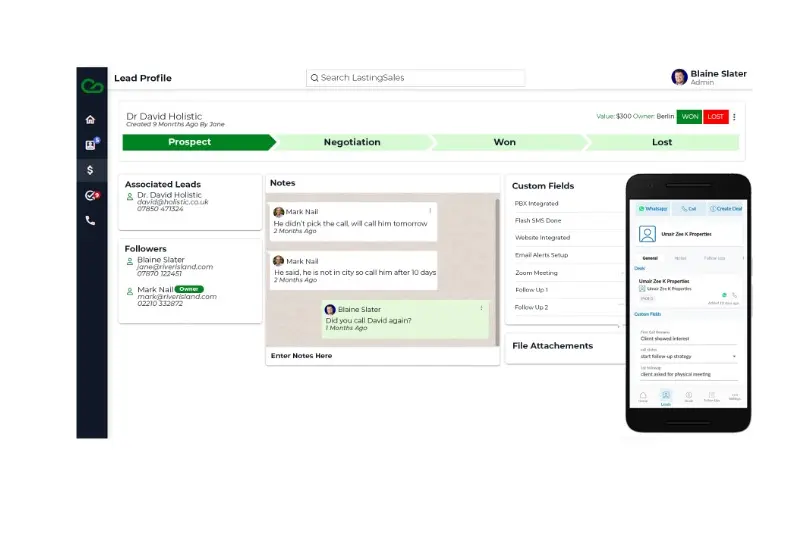
A central customer record can help teams access:
- Contact details and communication history.
- Customer goals and service requirements.
- Promises made during sales conversations.
- Agreed budgets, timelines, and deliverables.
- Outstanding questions and follow-up actions.
For example, if an agency promises a client an initial campaign review within a specific timeframe, the delivery team should be able to see that commitment without asking the sales representative to explain it again.
A shared record creates continuity and reduces the risk of misunderstandings.
2. Standardise the Sales-to-Service Handover
The handover between sales and service delivery is one of the most important stages in the customer journey. A poorly managed transition can make a new client feel that the business has forgotten earlier conversations.
Instead of relying on informal messages, businesses should establish a standard handover process.
A practical handover checklist might include:
- Confirm the services purchased and the agreed scope of work.
- Record the client’s objectives and expected outcomes.
- Document deadlines, dependencies, and special requirements.
- Identify the main client contact and internal account owner.
- List any unresolved questions or commitments.
- Schedule the first onboarding meeting or delivery milestone.
This process is especially useful when multiple employees contribute to the same account.
A structured handover also protects teams from unrealistic expectations. If a prospect requests additional work during negotiations, the agreed scope should be documented clearly so that delivery staff understand what is included and what requires further discussion.
3. Connect Sales Pipelines With Operational Workflows
A sales pipeline shows where opportunities stand, but it does not automatically explain what happens after a deal closes. Businesses benefit when the end of the sales process triggers a clear next step for the delivery team.
For instance, a deal marked as won could prompt an onboarding task, assign an account manager, and create a reminder to collect required information.
These workflows help employees understand their responsibilities without depending on repeated manual instructions.
Businesses can introduce simple rules such as:
- New enquiries receive an assigned owner.
- Qualified opportunities move to the appropriate sales stage.
- Won deals trigger onboarding preparation.
- Missing client information generates a follow-up task.
- Upcoming deadlines create reminders for responsible employees.
A CRM for coaches and trainers can also support this approach by connecting prospective learner enquiries with consultation bookings, programme selection, enrolment, and onboarding activities.
For example, when a prospective learner enrols in a training programme, the team can record the selected course, learning goals, payment status, and onboarding requirements. This makes it easier for trainers and administrative staff to prepare for the learner’s arrival.
The key principle is to make each important stage lead naturally to the next action.
4. Improve Communication Without Creating More Meetings
Collaboration does not mean every department needs to attend more meetings. In many cases, teams need better access to information rather than additional conversations.
A shared system can provide updates about customer interactions, assigned tasks, upcoming deadlines, and unresolved issues. Employees can review the latest information before contacting a customer or discussing an account.
Short, structured updates are often more useful than lengthy internal messages.
A useful client update should explain:
- What has been completed.
- What is currently in progress.
- What needs attention.
- Who is responsible for the next action.
- Whether the customer needs to provide anything.
Businesses should also define which communication channels are appropriate for different situations. Urgent delivery issues may require direct contact, while routine progress updates can be recorded in the customer management system.
Clear communication rules reduce duplicated effort and help employees spend more time on meaningful work.
5. Use Client Feedback to Improve Internal Processes
Customer feedback can reveal problems that are difficult to identify through sales reports alone.
If clients frequently ask for updates, the issue might be an unclear communication schedule. If projects regularly start late, the handover process may be incomplete. If customers misunderstand what they purchased, sales documentation might need improvement.
Rather than treating every complaint as an isolated incident, businesses should look for recurring patterns.
Useful questions include:
- Which stages generate the most customer questions?
- Where do projects experience repeated delays?
- What information is commonly missing at handover?
- Which commitments are frequently misunderstood?
- How often does a client need to repeat information?
Reviewing these patterns helps managers improve the process instead of simply asking employees to work harder.
Feedback should also flow in both directions. Delivery teams need a way to tell sales staff when common customer expectations are unrealistic or when additional information should be collected before a deal closes.
This creates a learning cycle in which each department helps the other improve.
6. Measure Collaboration With Practical Performance Indicators
Businesses do not need dozens of metrics to evaluate whether collaboration is improving. A small number of relevant indicators can reveal whether teams are working more effectively together.
Consider monitoring the following:
- Handover completion rate: The percentage of new clients whose required information is documented before delivery begins.
- Time to onboarding: How long it takes to start the agreed onboarding process after a sale.
- Task completion rate: The percentage of assigned actions completed by their deadlines.
- Client response time: How quickly the team responds to customer questions.
- Issue resolution time: How long it takes to resolve reported problems.
- Customer satisfaction: Feedback on communication, expectations, and service quality.
These metrics should be used to identify process improvements, not simply to judge individual employees.
For meaningful results, establish a baseline first and review performance regularly. Businesses can then determine whether new workflows are reducing delays, improving communication, or making the customer experience more consistent.
7. Build Collaboration Gradually
Introducing too many processes at once can create unnecessary complexity. A better approach is to identify the biggest communication gap and solve it first.
A business might begin by standardising client handovers, then introduce automated onboarding reminders, and later connect delivery milestones with customer records.
Employees should understand why each change matters and how it makes their work easier. Training, clear ownership, and regular feedback are essential for long-term adoption.
It is also important to keep customer information accurate and accessible only to authorised team members. Clear data-handling practices help protect client confidentiality while allowing employees to perform their responsibilities.
Conclusion: Turn Better Collaboration Into a Business Advantage
Strong collaboration helps service businesses deliver a more consistent customer experience, reduce duplicated work, and manage client expectations more effectively. Shared customer records, structured handovers, connected workflows, and practical performance indicators can make everyday operations easier to manage.
The goal is not to introduce technology for its own sake. It is to ensure that the right information reaches the right person at the right time. When sales and delivery teams work from a common understanding of customer needs and commitments, businesses can build stronger relationships, improve service quality, and create a more dependable foundation for growth.