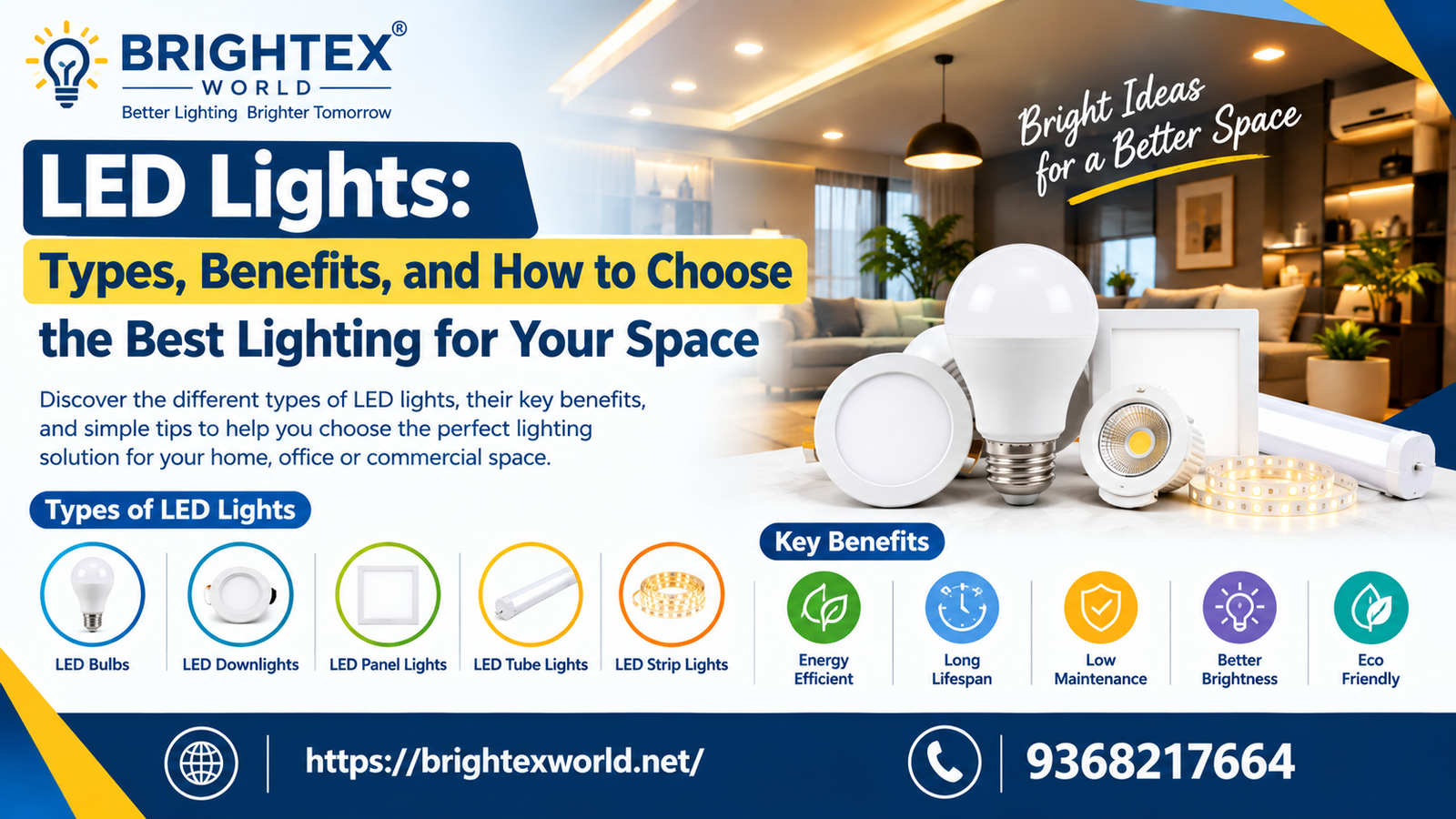
Lighting shapes how a space looks, feels and functions. A well-lit kitchen makes cooking easier, a properly lit office supports focus, and a good lighting layout in a warehouse helps people work more safely. Over the past years, LED lights have become the preferred choice for homes, shops, offices and industrial facilities alike.
LED lights are valued for their energy efficiency, long service life and flexibility in design. But with so many types, brightness levels and colour options available, choosing the right product can be confusing. This guide explains what LED lights are, how they work, their benefits, the main types, and how to choose the best lighting for your space.
What Are LED Lights?
LED stands for light-emitting diode. An LED light produces light when electric current passes through a semiconductor. Unlike traditional bulbs, it does not rely on heating a filament or exciting gas inside a tube.
LED lighting solutions are now available in many forms, from simple LED bulbs for homes to industrial LED lights for large facilities.
How LED Lights Work
When current flows through the semiconductor in an LED chip, it releases energy in the form of light. Most LED products also include a driver, which regulates the electrical supply to the LED, and a heat management structure, such as a heat sink, which helps keep the unit within suitable operating temperatures.
LED vs Traditional Lighting
LED lights differ from incandescent and fluorescent lighting in several practical ways. Actual figures vary by product, so always check the specifications of the item you plan to buy.
| Factor | LED Lights | Incandescent | Fluorescent |
| Energy consumption | Generally lower for similar light output | Generally higher | Moderate |
| Lifespan | Generally longer | Generally shorter | Moderate |
| Heat generation | Lower heat at the light source, though LEDs still need heat management | Produces significant heat | Produces some heat |
| Maintenance | Typically fewer replacements | More frequent replacement | Occasional tube or starter replacement |
| Design options | Wide range of shapes, sizes and colours | Limited | Mostly tubes and compact forms |
These comparisons are general. Performance depends on product quality, usage and operating conditions.
Key Benefits of LED Lights
- Energy efficiency: Energy-efficient LED lights generally use less electricity than traditional options for comparable brightness.
- Long service life: LEDs usually last longer than conventional bulbs, which can mean fewer replacements. Actual lifespan depends on the product and how it is used.
- Lower maintenance needs: Fewer replacements can reduce maintenance effort, especially in hard-to-reach areas.
- Lighting quality: Many LED lights offer steady, even illumination with a choice of colour temperatures.
- Design flexibility: LEDs come in compact and varied forms, from slim panels to flexible strips.
- Suitable for many applications: They work in residential, commercial and industrial settings.
Types of LED Lights
Choosing the right type starts with how you plan to use the space.
LED Tube Lights
Slim, linear fixtures often used as replacements for conventional tubes in offices, shops, schools and workspaces.
LED Bulbs
Versatile options for homes, available in various base types and shapes, commonly used in lamps, ceiling fixtures and general lighting.
LED Panel Lights
Flat, even-lighting fixtures often used in offices, classrooms and commercial interiors, either recessed or surface-mounted.
LED Downlights
Recessed or surface-mounted fixtures that direct light downward, commonly used in living rooms, retail displays and hospitality spaces.
LED Strip Lights
Flexible strips used for accent, cove and under-cabinet lighting, as well as decorative applications.
LED Floodlights
Wide-beam fixtures used for outdoor areas such as building exteriors, parking spaces, sports areas and perimeter lighting.
LED Streetlights
Designed for roads, public spaces and outdoor pathways, built to handle outdoor conditions.
Industrial LED High-Bay Lights
Used in high-ceiling spaces such as factories, warehouses and workshops to provide strong illumination over large areas.
Applications of LED Lights
LED lights are used across a wide range of settings:
- Homes: Bedrooms, living rooms, kitchens, bathrooms and gardens.
- Offices: Workstations, meeting rooms and corridors.
- Retail stores: General lighting and product highlighting.
- Factories and warehouses: Production areas, aisles and storage zones.
- Outdoor spaces: Parking areas, facades, pathways and streets.
- Educational institutions: Classrooms, labs and libraries.
- Hospitals: Wards, corridors and service areas.
- Commercial buildings: Lobbies, shopping areas and common spaces.
How to Choose the Best LED Lights for Your Space
A few key factors will help you compare products sensibly.
Brightness (Lumens)
Lumens measure light output. Choose based on how bright the space needs to be, not on wattage alone.
Colour Temperature
Measured in Kelvin (K), colour temperature describes how warm or cool the light appears. This has a big effect on the mood and function of a space.
Wattage
Wattage shows power consumption, not brightness. Compare lumens per watt to understand efficiency.
Energy Efficiency
Look for clear information on efficiency and, where applicable, energy ratings.
Beam Angle
A narrow beam concentrates light for accents or tasks, while a wide beam spreads light across a larger area.
Colour Rendering Index (CRI)
CRI indicates how accurately a light shows colours. A higher CRI is often preferred where colour accuracy matters, such as in retail displays or detailed work areas.
Dimming Compatibility
Not all LED lights are dimmable, and not all dimmers work with all LED products. Check compatibility before purchase.
Installation Requirements
Consider fixture type, mounting method, ceiling height, voltage and driver requirements.
Intended Use
A workshop, bedroom and showroom each need different lighting. Match the product to the task.
Warm White, Neutral White and Cool White
Colour temperature is one of the most important choices, and it is easy to get wrong.
| Type | Approximate Range | Look and Feel | Common Uses |
| Warm white | About 2700K–3000K | Soft, cosy, yellowish | Bedrooms, living rooms, hospitality areas |
| Neutral white | About 3500K–4500K | Balanced, natural | Kitchens, offices, retail spaces |
| Cool white | About 5000K–6500K | Crisp, bluish-white | Industrial workspaces, garages, utility areas |
Practical Recommendations
- Bedrooms: Warm white for a relaxing atmosphere.
- Living rooms: Warm white or neutral white, depending on the look you want.
- Kitchens: Neutral white for clarity during food preparation.
- Offices: Neutral white to cool white for alertness and visibility.
- Retail environments: Neutral white, with attention to CRI to display products accurately.
- Industrial workspaces: Cool white for clear visibility in task areas.
These are general guidelines. Personal preference and the specific space also matter.
Common Mistakes When Buying LED Lights
- Focusing only on wattage: Wattage does not tell you how bright a light is.
- Ignoring lumens: Lumens are the real indicator of brightness.
- Choosing an unsuitable colour temperature: A cool light in a bedroom or a warm light in a workshop may not feel right.
- Overlooking compatibility: Dimmers, fixtures and drivers must work together.
- Skipping quality checks: Products without clear specifications may not perform as expected.
- Buying the cheapest option only: Low price can come with trade-offs in quality or consistency.
How to Compare LED Lighting Products
Whether you are a homeowner or a business buyer, compare products using documented information.
- Energy ratings: Check them where applicable.
- Product specifications: Review lumens, colour temperature, CRI, beam angle and power rating.
- Safety certifications: Ask which standards and certifications apply, and verify them with the supplier.
- Expected lifespan: Look for clear information rather than broad claims.
- Warranty terms: Read the terms and ask for them in writing.
- Maintenance requirements: Consider ease of cleaning and replacement.
Tips for Installation, Cleaning, Safe Usage and Maintenance
Installation
- Choose fixtures, drivers and dimmers that are compatible with each other.
- Turn off the power supply before installing or replacing any light.
- Use a qualified electrician for wiring, high-bay installations and outdoor fixtures.
Cleaning
- Switch off and allow the light to cool before cleaning.
- Wipe with a dry or slightly damp soft cloth. Avoid harsh chemicals unless the manufacturer says they are suitable.
Safe Usage
- Do not exceed the rated load of the fixture or circuit.
- Use outdoor-rated fixtures in outdoor or damp areas.
- Ensure adequate ventilation around fixtures so heat can dissipate.
Maintenance
- Inspect lights periodically for flickering, discolouration or loose connections.
- Replace faulty drivers or units promptly.
Brightex World: Your LED Lighting Solutions Provider
Brightex World is a lighting solutions provider that helps customers explore LED lighting for residential, commercial and industrial spaces. If you are comparing LED tube lights, LED bulbs or other fixtures, you can visit brightexworld.net to browse the range or get in touch with the team for product information.
When you contact the company, it helps to share the size of your space, the type of lighting you need and how the area will be used, so the team can guide you better.
Frequently Asked Questions (FAQs)
1. What are LED lights?
LED lights are lighting products that use light-emitting diodes to produce light when electric current passes through a semiconductor. They are available as bulbs, tubes, panels, strips, floodlights and more.
2. How much energy can LED lights save?
LED lights generally use less electricity than incandescent and fluorescent lights for comparable brightness. Actual savings depend on the products you replace, how long the lights run and your electricity tariff.
3. Which LED lights are suitable for homes and offices?
Homes often use LED bulbs, downlights and strip lights, while offices commonly use LED panel lights and tube lights. The right choice depends on the room layout and the tasks performed there.
4. What colour temperature should I choose?
Warm white suits bedrooms and living areas, neutral white works well in kitchens, offices and shops, and cool white is often used in industrial and utility spaces.
5. How long do LED lights last?
LED lights generally last longer than traditional lighting, but lifespan varies by product quality, operating conditions and usage. Check the manufacturer’s information and warranty terms.
6. How do I select the right brightness?
Look at lumens rather than wattage. Consider the room size, ceiling height and what you will use the space for, and compare products by their lumen output.
7. Are all LED lights dimmable?
No. Only products designed for dimming can be dimmed, and they must be paired with a compatible dimmer. Check the product details before buying.
Conclusion
LED lights offer an efficient, flexible and long-lasting way to light homes, offices, shops and industrial spaces. The best choice depends on the space and its use: consider lumens, colour temperature, CRI, beam angle, compatibility and installation needs, rather than wattage alone. Compare documented specifications, check safety and warranty details, and follow sound installation and maintenance practices.
With the right information, you can choose lighting that looks good, works well and suits your needs for years to come.
Contact Brightex World
For more information about LED lighting solutions, contact Brightex World:
- Company: Brightex World
- Phone: 9368217664
- Email: brightx1010@gmail.com
- Website: https://brightexworld.net/